Small Dorm Room Ideas: How to Make a Tiny Space Feel Livable
Dorm and residence hall rooms are built for the minimum, not comfort. These ideas, most free or nearly free, help you use the space you actually have.
In this article
A standard dorm or residence hall room is roughly 10×12 feet, about 120 square feet, often shared with another person. The small dorm room ideas that actually work start from that reality: this space is smaller than many walk-in closets. Making it livable is not about accepting the constraints. It’s about making specific decisions that eliminate the most frustrating parts of a cramped space. A big part of that is going vertical — including inside the closet, where a few organization moves can double what actually fits.
Standing in the room for the first time, my first thought was that it was much smaller than the photos had made it look. We spent the first couple of hours rearranging furniture, trying to make things fit. The room that eventually felt manageable was the one with less in it, things put away, surfaces clear, floor space visible. Less stuff made the small room feel bigger.
Floor Items vs. Vertical Alternatives
| Instead of (floor item) | Use this instead | Space saved |
|---|---|---|
| Laundry hamper | Hanging laundry bag on closet hook | 1–2 sq ft of floor |
| Floor lamp | Desk lamp or string lights | 1 sq ft of floor |
| Bean bag or extra chair | Skip until you see the room | 4–6 sq ft of floor |
| Floor-standing full-length mirror | Over-door mirror | 1–2 sq ft of floor + wall |
| Bookshelf on the floor | Floating shelf above desk | 2–4 sq ft of floor |
| Magazine rack or file holder | Wall-mounted pocket organizer | 0.5 sq ft of floor |
Quick answer: The floor is the scarcest resource. Keep it to the minimum (bed, desk, chair, trash bin) and put everything else on walls, under the bed, or on hooks. Three highest-impact changes: (1) loft or raise the bed, creates floor space equal to the entire bed footprint below; (2) add a row of hooks by the door, backpacks and bags never touch the floor again; (3) fill the under-bed space with flat rolling bins after measuring the clearance. Rearranging the furniture costs nothing and often makes more difference than any purchase.
Start With the Floor
The floor in a small dorm room is the scarcest resource. Every item sitting on it reduces how livable the room feels.
The goal: Keep floor items to the minimum, bed frames, desk and chair, trash bin. Everything else should be on a wall, in a drawer, under the bed, or on a hook.
Go through what you’re planning to bring and ask: does this actually have to touch the floor? A hamper becomes a hanging laundry bag on a closet hook. A stack of extra bedding goes under the bed. Backpacks go on a hook by the door.
How Do You Use the Space Under Your Bed?
The area under a dorm bed is often 7–12 inches of clearance, and most students either ignore it or use it as a disorganized dumping ground. Used intentionally, it holds a significant amount.
What to store there:
- Flat rolling bins with lids for seasonal clothes, extra bedding, and shoes
- Vacuum compression bags for winter coats and heavy sweaters
- A spare suitcase packed with off-season items
Measure first. Not all dorm beds have the same clearance, and not all “under-bed” bins actually fit. Measure height from floor to frame before buying anything.
If your clearance is too low, ask your housing office about raising the bed, or check whether bed risers are permitted.
For more detail, see Best Under-Bed Storage for Dorm Rooms.
Go Vertical
Walls are free storage. Most dorms allow Command strips, which means:
Floating shelf above the desk, holds books, a small plant, or supplies off the desk surface without taking up any floor or desk space.
Row of hooks by the door, backpacks, bags, jackets, and umbrellas go here and never end up on the floor or draped over a chair back.
Over-door organizer, the back of a dorm door is wasted space. A 24-pocket clear organizer adds significant small-item storage for toiletries, cleaning supplies, and accessories.
Wall-mounted power strip, attach your power strip to the side of the desk with Command strips instead of leaving it on the floor. Keeps cables up and frees under-desk space. For a full desk organization system, see Dorm Room Desk Organization.
Define Zones Even in a Tiny Room
A room with a clear study area and a clear sleep area functions better than one where everything runs together, even if those zones are only a few feet apart.
- Keep the desk for work only. Don’t do everything from your bed
- Keep the bed for rest, studying in bed all day blurs the line between work and sleep and makes both harder
- Keep the floor space between the two clear. Treat it as transition space, not storage
Light helps signal which mode you’re in. Desk lamp on when studying. String lights or a dim lamp for evenings. These small habits matter more than they sound.
What Furniture Does a Small Dorm Room Not Need?
A second chair. Dorm rooms come with a desk chair. A bean bag or small armchair takes up real floor space. Most students stop using it within a few weeks. If you still want one after you see the room in person, buy it then.
A full laundry hamper. A hanging laundry bag on a closet hook does the same job and uses zero floor space.
A large rug. A rug sized for a bedroom (8×10) doesn’t fit most dorm rooms. It bunches under furniture and makes the room feel more crowded, not less. A 4×6 or 5×7, measured first, is the right call.
A floor-standing full-length mirror. Leaning mirrors take up wall real estate. If you want one, use an over-door version. It hooks onto the back of the door and uses no wall or floor space at all.
What Free Changes Make the Biggest Difference?
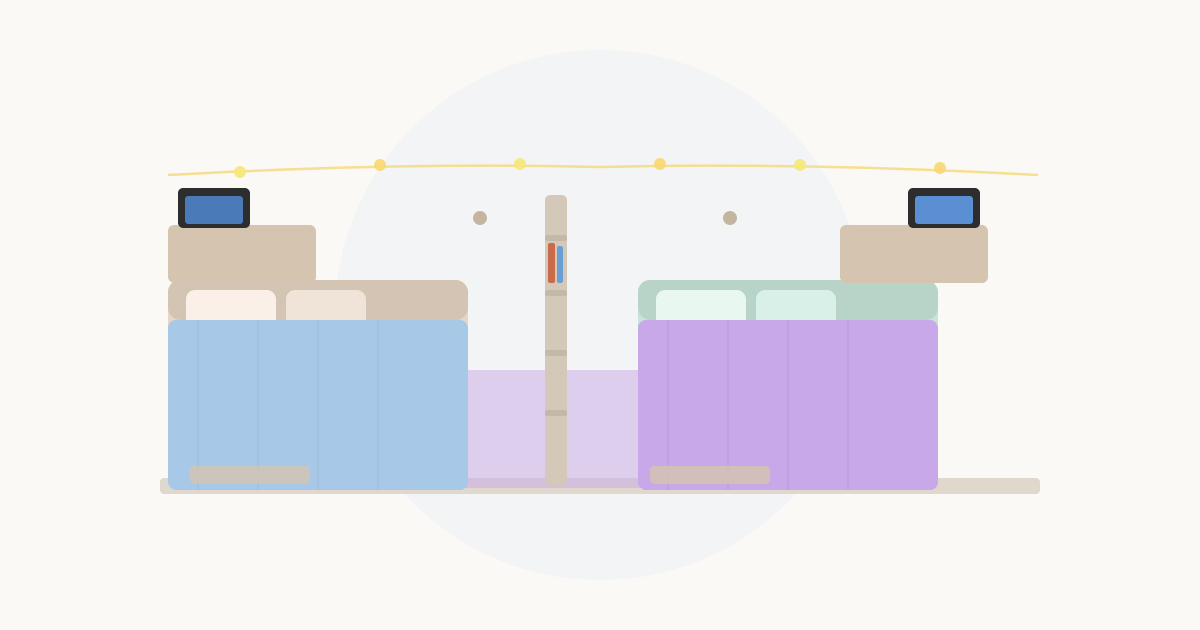
Rearrange the furniture. Most dorms let you move pieces around. The default layout is not necessarily the best one. Try putting the desk by the window, or moving the beds to opposite walls, before deciding the room is too small. See Dorm Room Layout Ideas for specific arrangements that work in tight spaces.
Raise or loft the bed. Lofting creates space underneath for a small seating area, a desk, or substantial storage. Many dorm beds are adjustable. Ask facilities.
Remove furniture you’re not using. If the room comes with a second nightstand or a piece you won’t use, ask your housing office whether it can be stored. Many schools accommodate this and give you back meaningful floor space.
Add a tension rod in the closet. A second hanging rod at mid-height doubles hanging space in a closet that was only using the top half.
Make a Small Room Feel Bigger, Not Just Hold More
Storage solves the function of a small room. But how big a room feels is a separate problem, and it’s mostly about light, color, and sightlines, not square footage. A well-organized room can still feel cramped if every surface is dark and cluttered. These changes make the same room read as more open:
Put a mirror opposite or next to the window. A mirror reflects natural light back into the room and creates the illusion of depth, the single most effective trick for making a small space feel larger. An over-door mirror does this without using any wall or floor space. See Dorm Room Mirror Ideas.
Keep the biggest surfaces light. Light, neutral bedding and a light rug recede visually and reflect more light; dark colors absorb light and close a room in. Save bold or dark colors for small accents like a pillow or a single piece of art.
Hang curtains high and wide. Mounting a curtain rod near the ceiling rather than at the top of the window frame draws the eye upward and makes the walls feel taller. It’s a free change that makes a low-ceilinged dorm feel less boxed in.
Protect the negative space. A visible floor reads as a bigger room. Resist the urge to fill every empty corner, those gaps are what make the space feel open. One clear stretch of floor does more for the feeling of size than any organizer.
Choose one larger rug over scattered small items. A single 5×7 rug that anchors the room reads as calmer and more spacious than several small mats and pieces competing for the eye. Visual cohesion feels open; visual clutter feels small. See the Dorm Room Rug Guide.
Draw the eye up. One tall element, a trailing plant on a high shelf, vertical string lights, a tall narrow bookcase, pulls attention upward and makes the room feel taller than it is.
None of these add storage. All of them make the room a more pleasant place to actually be, which is the part most “small room” advice forgets.
Key Takeaways
- The floor is the scarcest resource. Keep it to bed, desk, chair, and trash bin; everything else goes vertical, under the bed, or on hooks.
- Lofting or raising the bed creates the most floor space for the least cost. Check your school’s policy first.
- Measure under-bed clearance before buying any bins, flat rolling bins (6 inches or less) hold more than most students expect.
- A row of Command hooks by the door keeps backpacks, bags, and coats off the floor permanently. Buy a variety pack.
- Skip the standing laundry hamper, a hanging laundry bag on a closet hook does the same job and uses zero floor space.
- Rearrange before you buy, trying the desk by the window or moving beds to opposite walls is free and often makes more difference than any purchase.
- Ask housing to remove furniture you won’t use, many schools will store it and give you back meaningful floor space.
Related Dorm Guides
- Minimalist Dorm Room Ideas, the calm, clutter-free approach that suits a tight space
- Dorm Room Storage Ideas, the five storage zones and what to put in each
- Best Under-Bed Storage for Dorm Rooms, measuring, bin types, and bed riser options
- Dorm Room Layout Ideas, furniture arrangements that work in tight spaces
- How to Organize a Dorm Closet, maximizing the closet specifically
- Dorm Room Shared Living Tips, dividing a small shared room fairly
- Complete Dorm Room Checklist for Freshmen, full shopping list for setup
- What to Pack for a Dorm Room, why to hold storage purchases until after move-in
Frequently Asked Questions
- The biggest factors are light and clear floor space. A warm desk lamp plus string lights make the room feel larger than overhead lighting alone. Keeping the floor as clear as possible, using under-bed storage, wall hooks, and vertical shelves, removes visual clutter. A rug also helps define zones and makes the space feel more intentional.
- Measure before unpacking anything. Know how much under-bed clearance you have, where the outlets are, and whether you can rearrange furniture. Most small-room problems come from buying storage or furniture without checking dimensions. Set up the bed and desk first. They anchor everything else.
- Go vertical and use every door. Wall shelves, over-door organizers, hanging hooks, and stackable bins use space that would otherwise be wasted. Under-bed storage is the largest single untapped zone in most dorm rooms, flat rolling bins fit more than most students expect.
- Anything that sits on the floor without serving a daily function. This includes hampers (replace with a hanging laundry bag on a hook), extra chairs nobody uses, rugs larger than the floor allows, and decorations that take up surface space. Every floor item costs you real, usable space.
How do I make a small dorm room feel bigger?
What should I do first when setting up a small dorm room?
How do you store things in a small dorm room?
What should you not put in a small dorm room?