Blackout Curtains for Dorm Rooms: What to Buy and How to Hang Them
Dorm windows let in more light than you expect. Here's what to measure, what to buy, and how to hang blackout curtains without damaging dorm walls.
In this article
Dorm room curtains are one of those things students don’t think about until 6:30 a.m. when a streetlight or early sunrise is hitting them in the face through thin housing-issue sheers.
The good news: blackout curtains are easy to hang without damage, not expensive, and make a real difference for sleep. For more on lighting in the dorm room overall, see Dorm Room Lighting Ideas.
The first thing I noticed when I walked into my dorm room was how cold and uncomfortable it felt. The overhead light was harsh and the window let in a lot of early morning light. Once I added curtains and switched to a warm desk lamp, the room felt completely different. Lighting and light control were the biggest single change I made.
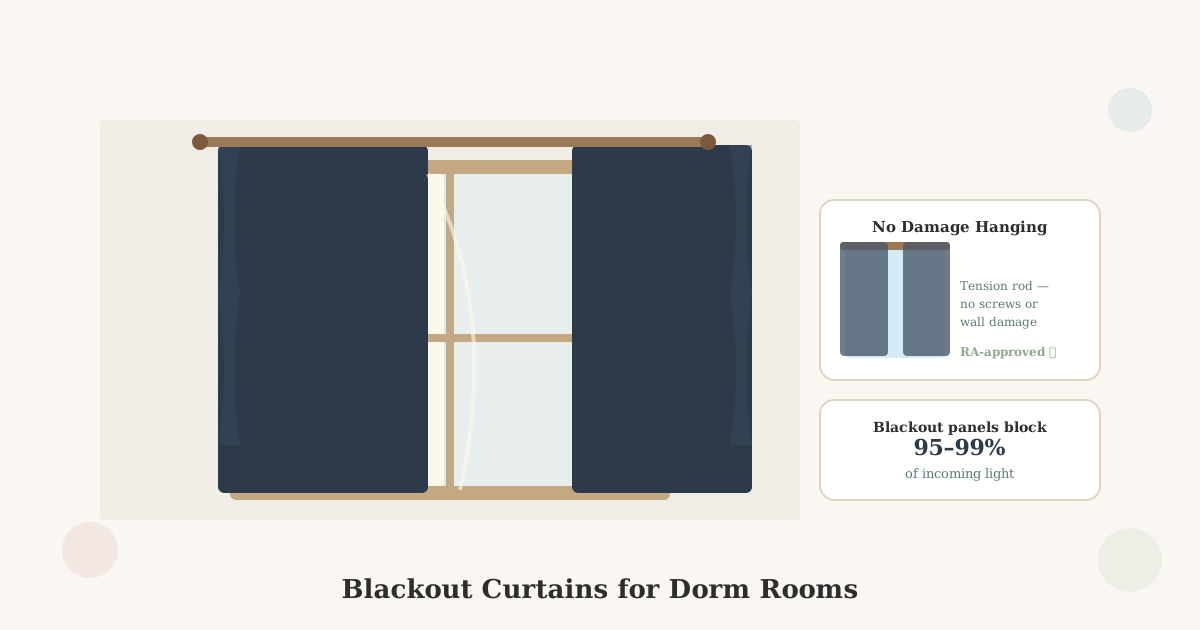
Quick answer: A tension rod inside the window frame is the easiest no-damage method, no screws, no holes, holds by spring pressure. For better edge-to-edge light blocking, mount a lightweight rod above and outside the frame with large Command hooks so the curtains overlap the wall on both sides. Buy panels labeled “blackout” (95–99% light blocked) rather than “room-darkening” (85–95%) if you’re light-sensitive or have a bright street-facing or east-facing window. Standard panel lengths are 63”, 84”, 95”. Measure from rod to desired end point before ordering.
Step 1: Measure Before You Order
This is the step that prevents returns. Measure:
Window width: The inside width of your window frame, in inches. Most dorm windows are 36–48 inches wide. If you want the curtains to overlap the wall on both sides (better light blocking), measure wider.
Window height: From the rod to where you want the curtain to fall. If hanging a tension rod inside the window frame, measure frame to sill. If hanging a rod above the frame, measure from rod position to floor or desired length.
Standard curtain panel lengths: 63”, 84”, 95”. Choose the closest to your measurement or slightly longer (curtains that brush the floor look intentional; curtains that stop mid-wall look too short).
Step 2: Choose a Hanging Method
Tension Rod (Recommended, No Damage)
A tension rod expands to fit inside a window frame and holds itself in place by spring pressure, no screws, no holes, no wall damage. This is the most common and landlord/RA-friendly method.
Limitation: A tension rod inside the frame leaves a small gap at the edges where light gets in. This is manageable for most situations but not perfect blackout.
What to look for: Get the correct size range. If your window frame interior is 40 inches, you need a tension rod rated for that width. Most tension rods come in size ranges (like 28”–48”); buy the one that covers your measurement.
→ Shop tension curtain rods on Amazon
Command Hook + Curtain Rod
For better light blocking, mount a lightweight rod slightly above and outside the window frame using large Command hooks. This lets the curtains extend past the frame edges and overlap the wall, eliminating most edge light.
This requires flat wall space above and beside your window, and Command hooks rated for the rod’s weight.
→ Shop Command hooks for curtain rods on Amazon
Step 3: Choose the Right Curtains
True Blackout Panels
Look for curtains labeled “blackout” or “room-darkening.” The difference:
- Blackout: 95–99% light blocked. Usually heavier, often with a white or silver backing layer. True blackout panels are the right choice if you’re sensitive to light or have a bright window exposure.
- Room-darkening: 85–95% light blocked. Lighter fabric, softer look. Good for most situations.
What to look for:
- Grommet top or rod pocket, both work with tension rods and standard rods
- A solid color that fits your room’s palette (white, gray, and navy hide dorm rooms well; bold patterns can overwhelm a small space)
- Thermal backing, adds light blocking AND insulation, which helps in winter when dorm windows let in cold air
→ Shop blackout curtain panels on Amazon
Clip-On Blackout Liner
If you want to keep existing curtains (or the housing-provided sheers) but add light blocking, a clip-on blackout liner attaches directly to the back of your current curtain panel with small clips. No additional rod required.
Less precise than full replacement panels, but a good solution if you’re happy with the look of existing curtains and just want to block more light.
→ Shop clip-on blackout liners on Amazon
Curtains as Decor
Beyond light and privacy, curtains visually change a dorm room:
They make the room feel taller. Hang the rod higher than the window frame (even just 4–6 inches above) and the room feels larger.
They add color and texture. A solid deep color (navy, forest green, burgundy) anchors the room and makes cheap furniture look more intentional.
They add privacy. First-floor and street-facing dorm windows can feel exposed at night. Curtains address this immediately.
What to Avoid
Fire hazard placement. Don’t hang curtains over a baseboard heater, radiator, or in a position that would block a sprinkler head. This is a real safety issue, not just a policy one.
Very cheap curtains. Ultra-cheap blackout curtains often use a flimsy backing that starts peeling after a few washes and cracks with sunlight exposure. Mid-range panels from recognizable brands hold up better over a full college career.
Patterns that overwhelm. In a small dorm room, large geometric or floral patterns on curtains can make the space feel busy. Solid colors or subtle textures tend to work better.
Key Takeaways
- Measure before ordering, window width and rod-to-end-point height; most dorm windows are 36–48 inches wide.
- A tension rod is the easiest no-damage option. It fits inside the window frame by spring pressure, no screws or holes needed.
- For better edge-to-edge blackout, mount a lightweight rod above the frame with Command hooks so curtains overlap the wall and eliminate the side gaps a tension rod leaves.
- Blackout panels block 95–99% of light; room-darkening blocks 85–95%. Choose based on how light-sensitive you are and how bright your window exposure is.
- Don’t hang curtains over a heater, radiator, or near sprinkler heads, a genuine fire safety concern, not just a policy one.
- Hang the rod 4–6 inches above the frame. It makes the room feel taller and the window appear larger.
- Solid colors or subtle textures work better than large patterns in a small dorm room, bold patterns overwhelm a compact space.
For more on making your dorm room feel like home, see How to Decorate Dorm Walls Without Damage and Dorm Room Lighting Ideas.
Related Dorm Guides
- Dorm Room Lighting Ideas, full lighting setup for ambiance, task lighting, and sleep zones
- How to Decorate Dorm Walls Without Damage, Command strips and damage-free hanging methods for the rest of the room
- Dorm Room Rug Guide, another design element that anchors the room alongside curtains
- Best White Noise Machines for Dorm Rooms, pairs with blackout curtains for complete sleep environment control
- Make Your Dorm Room Feel Like Home, how curtains fit into the overall dorm room transformation
- Dorm Room Ideas for Girls, curtain and decor ideas in the context of a full room aesthetic
Frequently Asked Questions
- Yes. Most dorms allow curtains as long as they don't require permanent hardware installation. A tension rod (no holes or screws required) fits inside the window frame and holds standard curtain panels. Some dorms already have a curtain rod or track installed. Check before buying a tension rod. The main restriction to check is fire safety: curtains must not cover heat sources or block sprinklers.
- Measure your window width and height before ordering. Most dorm windows are 36–48 inches wide and 36–60 inches tall. For a tension rod inside the window frame, get curtains that match your window width. For a rod mounted wider than the window (to make the window appear larger), get panels that together span the rod width. Standard panel lengths are 63", 84", and 95". Measure your window height and choose the closest length.
- True blackout curtains, properly installed, block 95–99% of incoming light. The remaining light usually comes in around the edges if the curtain doesn't fully cover the window frame. To minimize edge light, hang the rod slightly wider than the window frame so the curtains overlap the wall on both sides. A tension rod inside the window frame leaves some edge gap; a rod mounted wider does not.
- If your window faces a lit parking lot, a streetlight, east (sunrise direction), or another building with exterior lights, yes, blackout curtains make a noticeable difference in sleep quality. If you're a heavy sleeper with a north-facing window that gets limited light, lighter curtains are fine. Light sensitivity during sleep varies, but most people sleep better in genuine darkness.
Can you put curtains in a dorm room?
What size curtains do I need for a dorm window?
Do blackout curtains actually block light completely?
Are blackout curtains worth it for a dorm room?