Dorm Room Workout Setup: How to Stay Active in a Small Space
You don't need a gym membership or a lot of space to stay active in college. Here's what equipment actually fits in a dorm room and how to use it.
In this article
Most college students have free campus gym access already paid for through student fees. That’s the best option for anything involving weights, cardio machines, or space-intensive exercise.
But a dorm room workout setup fills the gaps, early mornings before the gym opens, late nights when you don’t want to walk across campus, and quick sessions between classes. Here’s what actually works in a small space. For the full room layout approach including floor space, see Dorm Room Layout Ideas.
The workout habit that actually stuck was the one that required the least friction, something I could do in the room for 20 minutes rather than a full trip to the gym. The campus gym was available but easy to skip when schedules got busy. Resistance bands take up no space and got used regularly in a way that a more ambitious setup wouldn’t have.
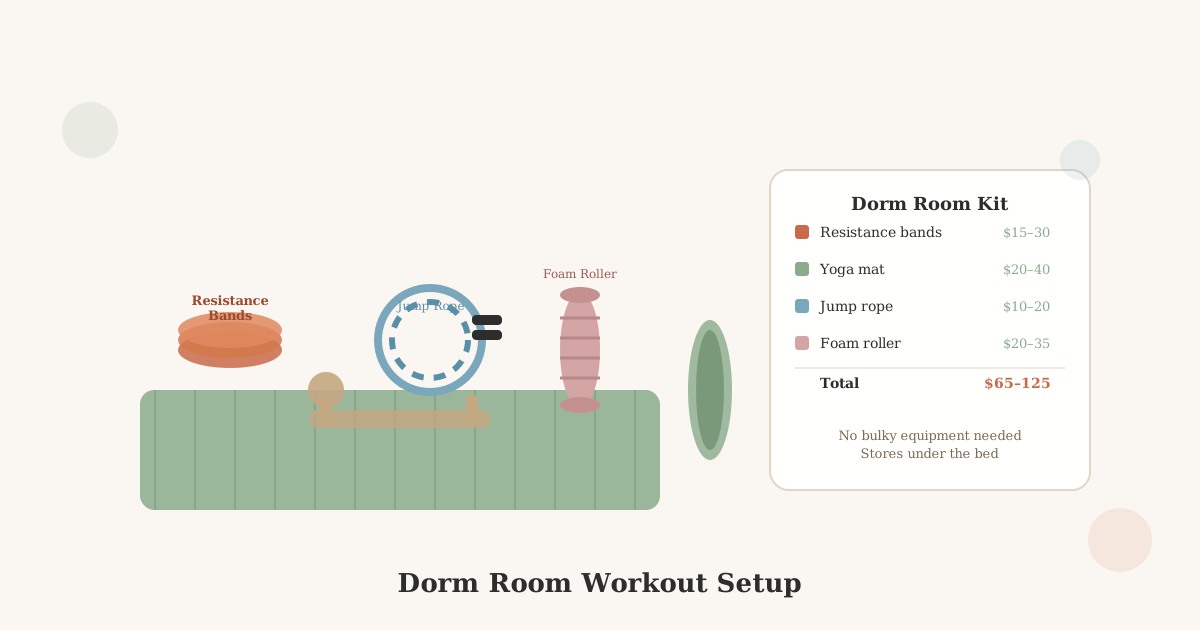
Quick answer: Check your campus gym access first, most students already pay for it through student fees and it’s almost always better than in-room equipment for weights and cardio machines. For in-room gaps: a set of resistance bands ($15–$30) and a yoga mat ($20–$40) cover a complete bodyweight-plus-resistance workout; both store in a drawer or roll against the wall. Skip door-frame pull-up bars (often prohibited, can damage frames) and heavy dumbbells (campus gym handles those). Avoid jump rope on wood floors over another room, take it outside.
Before You Buy: Use Your Campus Gym First
Check what’s included with your student ID. Most campus rec centers have:
- Full weight rooms
- Cardio equipment
- Group fitness classes (yoga, HIIT, cycling)
- Basketball courts, racquetball, climbing walls
- Sometimes a pool
This is already paid for. Before spending money on equipment, spend a week visiting the campus gym and figuring out what you actually want to do. Then fill in the gaps with dorm room equipment.
The Core Dorm Room Workout Kit
Resistance Bands ($15–30)
The most space-efficient strength training tool available. A set of resistance bands with multiple resistance levels (light, medium, heavy) fits in a drawer and covers a full-body workout, rows, presses, squats, curls, shoulder exercises, glute work.
What to look for:
- Loop bands AND resistance tube bands (they serve different exercises)
- Multiple resistance levels in one set
- A door anchor (allows pulling exercises without a partner or anchor point)
→ Shop resistance band sets on Amazon
Yoga Mat ($20–40)
A yoga mat serves more purposes than yoga: stretching, floor exercises, core work, push-ups, and any ground-based workout. It provides a clean surface, slight cushioning, and a defined workout area in a shared room.
What to look for:
- 4–6mm thickness (thicker is more comfortable for floor work; thinner is lighter and rolls tighter)
- Non-slip surface
- Long enough to lie flat (standard 68” length works for most heights; 72” or 74” if you’re taller)
- A carrying strap or bag for trips to the campus gym or yoga class
A rolled mat stands in the corner or fits under the bed when not in use.
Jump Rope ($10–20)
A jump rope is one of the most effective cardio tools available and takes up almost zero space. Three to five minutes of jump rope intervals is a serious cardio workout.
Floor considerations: Jumping rope generates impact and noise. Check whether your building has concrete floors (fine) or wood floors over another room (be considerate of timing). An outdoor sidewalk, parking lot, or common area is often a better choice than your room floor.
What to look for:
- Adjustable length (important for the right fit, rope too long or too short affects jump efficiency)
- Lightweight handles with ball bearings (smoother rotation, less arm fatigue)
Foam Roller ($20–35)
A foam roller is for recovery, rolling out muscle tightness after workouts or long sitting sessions. College students spend significant time sitting at desks and carrying heavy backpacks, which creates back, shoulder, and hip tightness. A foam roller addresses this in 10 minutes without leaving the room.
What to look for:
- High-density foam (softer foam compresses and becomes useless quickly)
- Standard diameter (5–6 inches) and length (12–18 inches for dorm use; full 36-inch rollers are too long to store easily)
Slides under the bed or in a corner when not in use.
Building a Workout Routine With This Kit
A complete workout using only a mat, resistance bands, and bodyweight:
Warm-up (5 minutes):
Arm circles, hip circles, leg swings, inchworms, light jumping jacks
Upper body (3 sets each):
Push-ups, resistance band rows (door anchor), resistance band overhead press, tricep band extensions
Lower body (3 sets each):
Squats, resistance band deadlifts, reverse lunges, resistance band glute bridges
Core (3 sets each):
Plank, dead bug, bicycle crunches, hollow body hold
Cool-down (5 minutes):
Hip flexor stretch, hamstring stretch, chest opener, thoracic spine rotation on the mat
This takes 30–40 minutes and needs about a 6×6 foot clear area, achievable in most dorm rooms by pushing a chair back from the desk.
What to Skip in a Dorm Room
A pull-up bar (door frame type). Door frame pull-up bars work by tension against the door frame. They can damage the frame and are prohibited in many dorms. Use the campus gym pull-up bar instead.
Dumbbells or kettlebells. Heavy, awkward to store, and unnecessary if you have campus gym access for heavy lifting. Adjustable dumbbells save space but cost $100–200+. Worth it for a home apartment, overkill for a dorm.
An ab roller. Works well on hard floors, nearly useless on carpet (which most dorm rooms have). Resistance bands and bodyweight core exercises are more versatile.
Anything that requires a large footprint. Balance boards, inversion tables, home rowing machines. These don’t fit in a dorm room practically.
Working Out Considerately in Shared Spaces
A few things that keep you on good terms with your roommate and neighbors:
- Talk to your roommate about workout timing, some people find workout noise disruptive early or late
- Use the mat to muffle floor contact, but go to the gym for anything that involves jumping or heavy impact
- Store equipment when not in use, a foam roller and resistance bands on the floor are tripping hazards in a small room
- Ventilate if possible. Open a window after a workout session in a small shared room
Key Takeaways
- Check campus gym access first, most students already pay for it through student fees; it’s better than in-room equipment for weights and cardio machines.
- Resistance bands are the most space-efficient strength training tool, multiple resistance levels, fit in a drawer, cover full-body workouts.
- A yoga mat serves more purposes than yoga: stretching, core work, floor exercises, and a defined workout surface in a shared room.
- Avoid jump rope on wood floors over another room, take it outside to a sidewalk or parking lot where floor impact doesn’t matter.
- Skip door-frame pull-up bars, often prohibited in dorms and can damage the frame.
- Skip heavy dumbbells or kettlebells in a dorm room. Use the campus gym for heavy lifting; it’s free.
- Talk to your roommate about workout timing, early morning and late-night exercise noise can be disruptive in a shared room.
For more on making your dorm room functional, see Small Dorm Room Ideas and Dorm Room Layout Ideas.
Related Dorm Guides
- Dorm Room Layout Ideas, how to position furniture to create the floor space you need for workouts
- Small Dorm Room Ideas, space-saving strategies that create room for movement
- Best White Noise Machines for Dorm Rooms, useful for sleeping after an evening workout while your roommate is still awake
- Dorm Room Smell Fresh, ventilation and odor tips for after in-room workouts
- Complete Freshman Dorm Checklist, full move-in list where workout equipment fits in the broader picture
- Best Budget Dorm Finds, affordable practical items including the mat and bands for this setup
Frequently Asked Questions
- Yes, with some adjustments for space and noise. Bodyweight exercises (push-ups, squats, lunges, planks), resistance band workouts, yoga, and stretching all work well in a dorm room. High-impact exercises like jumping jacks or burpees may bother the floor below you, so check your building's floor sensitivity or stick to lower-impact options for in-room workouts.
- The best options are compact and easily stored: resistance bands (fit in a drawer), a yoga mat (rolls up and stands against the wall), a jump rope (coils into a bag), and a foam roller (slides under the bed). Dumbbells are effective but heavy and harder to store, adjustable dumbbells save space but cost more. Avoid bulky equipment like benches, pull-up bars that require door frames, or large exercise machines.
- Most colleges include gym access in student fees. It's already paid for. The campus rec center typically has a full weight room, cardio equipment, group fitness classes, and sometimes a pool. Check your student ID access and the gym hours before assuming you need to work out in your room. The campus gym is usually a better option than in-room equipment for heavy lifting.
- Avoid jumping, running in place, and dropping weights. Stick to bodyweight movements, resistance bands, yoga, and floor exercises. If you want to do higher-intensity cardio, use the campus gym or an outdoor track. For floor work, a yoga mat provides slight cushioning but doesn't fully muffle sound, be aware of the floor below you, especially during early morning or late-night sessions.
Can you workout in a dorm room?
What workout equipment fits in a dorm room?
Is the campus gym free for students?
How do I work out quietly in a dorm room without bothering neighbors?