Dorm Room Lighting Ideas: Cozy, Study-Ready & Dorm-Safe
Dorm room lighting ideas that go beyond the one harsh overhead light: layered setups for studying, winding down, and making the space feel cozy — all dorm-safe.
In this article
The overhead light in most dorm rooms is a single ceiling fixture, usually bright, flat, and pointed straight down. It works for finding your keys but it’s not comfortable for studying, and it’s genuinely bad for winding down before sleep.
Fixing this costs less than $50 and makes one of the most noticeable quality-of-life differences in a small room. For desk lamp specifics, see Best Dorm Room Desk Lamps.
The overhead light in my dorm was honestly the worst part of the room when I first moved in, bright, cold, and it made the space feel more like a classroom than somewhere I’d actually want to spend time. A few weeks in I added a warm desk lamp and some string lights, and the difference was bigger than I expected. The room immediately felt more comfortable and I started wanting to actually hang out there instead of finding somewhere else to go. Lighting changed more about the room than any piece of furniture did.
Quick answer: Build two layers, task lighting and ambient lighting. For the desk: a dimmable lamp with adjustable color temperature, cool-white (4000K–5000K) for focused study. For the room: warm white string lights (2700K) behind or above the bed on a timer, under $15. Use the overhead only for utility tasks. That three-piece setup, desk lamp, string lights, overhead for utility, handles everything and costs under $50 total. Keep cool white out of the sleeping zone; it actively interferes with wind-down.
Color Temperature Quick Reference
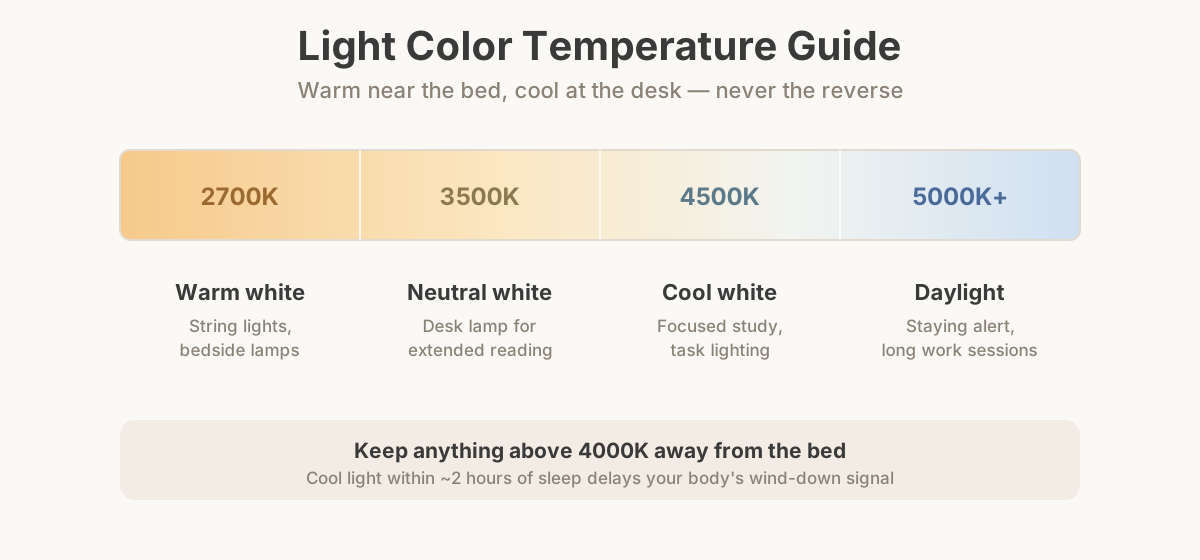
| Kelvin Range | Type | Looks Like | Best Used For | Avoid Near |
|---|---|---|---|---|
| 2700K–3000K | Warm white | Soft yellow-orange | String lights, bedside lamps, evening ambiance | Study desk during active work |
| 3500K–4000K | Neutral white | Clean and balanced | Desk lamps for extended reading | Late-night, near the bed |
| 4000K–5000K | Cool white | Bright, slightly blue-white | Focused study sessions, task lighting | Anything within 2 hours of sleep |
| 5000K+ | Daylight | Bright, energizing | Staying alert during long work sessions | Evening and bedtime use |
Think in Two Layers
Good room lighting has two layers: task lighting for focused work and ambient lighting for general comfort. The overhead covers neither well.
Task lighting goes on when you’re working. Your desk lamp, pointed at your work surface, bright enough to read clearly without straining.
Ambient lighting fills the room with soft, warm light for everything else, studying in bed, relaxing, hanging out. This is where string lights, floor lamps, and LED strips come in.
Together, they let you dial the room to what you actually need without relying on the overhead at all.
String Lights
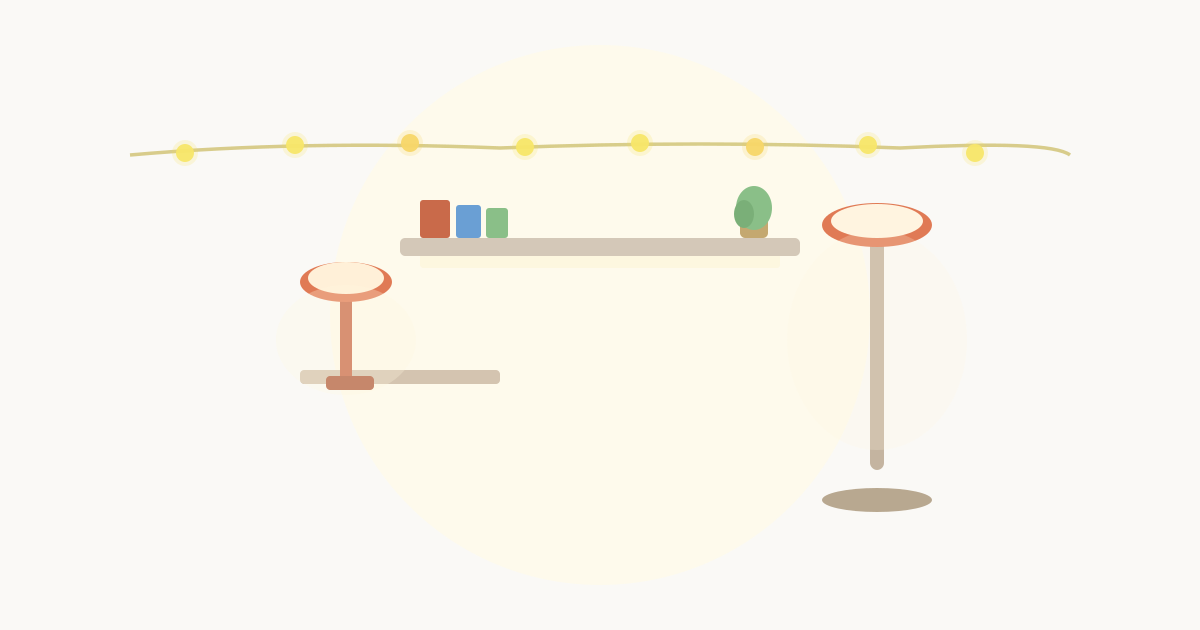
String lights are the most common and cost-effective ambient upgrade for a dorm room. A set of warm LED string lights along a window frame, above a headboard, or along a shelf adds a glow that immediately makes the room feel warmer and more personal.
What to look for:
- Warm white (2700K) rather than cool white or multicolor
- LED, not incandescent, uses less electricity and stays cool to the touch
- USB-powered or battery-powered if your outlet placement is limited
- A timer function so they turn off automatically when you sleep
Where to put them:
- Along the wall behind or above the headboard
- Around a window frame
- Along the front edge of a shelf above the desk
- Tucked along the top of a wardrobe or bookshelf
String lights stay on for hours, use almost no power, and look good during the day even when off.
LED Strips
Peel-and-stick LED strips attach to the underside of a shelf, the back of a desk, or along a wall edge to create indirect glow. Most come with remote or app control and can display different colors.
The practical use in a dorm room: a warm backlight behind a monitor (reduces eye strain in a dark room) or a soft glow under a shelf above the desk. The color-cycling feature gets old faster than most students expect, warm white is more useful day to day.
Floor Lamps
A slim floor lamp in the corner of a room adds soft upward light that bounces off the ceiling and fills the space without harshness. It’s particularly useful in shared rooms, a corner lamp aimed at the ceiling creates enough general light for one person to move around while the other sleeps, without shining directly at anyone.
Look for:
- Slim base that doesn’t eat floor space
- A warm bulb (2700K–3000K)
- A dimmer switch or smart-plug compatibility
Clip-On and Battery-Powered Options
When an outlet or a cord run is awkward, battery-powered options fill the gaps.
Under-shelf puck lights with motion sensors, functional task lighting with no wiring. Useful under a shelf above the desk or inside a dark closet.
Rechargeable clip-on reading light, attaches to a headboard for reading in bed without the overhead or a lamp that might disturb a roommate.
Closet LED strip, most dorm closets have no light. A battery-powered motion-sensor strip inside the closet solves this without any installation.
What to Skip
Multicolor cycling lights as primary lighting. One LED strip set to party mode makes the room look like a club rather than a place you want to study and sleep. Use color-changing lights as an accent only.
Candles. Almost universally prohibited in dorm rooms. Battery-operated flameless LED candles are allowed everywhere and look surprisingly similar.
Cool white LEDs near the bed. Cool white light (5000K+) is good for staying alert while studying but actively interferes with sleep if you use it in the evening. Keep warm and dim near the bed.
A Simple Setup That Works
If you want one clear recommendation:
- Desk lamp with adjustable color temperature, cool for studying, warm for evenings
- String lights behind or above the bed, warm white, on a timer
- Overhead only for utility tasks (cleaning, finding things)
Three things, all under $50 total, and the room feels completely different from day one.
Lighting Safety and Dorm Rules
Lighting is the category where dorm fire-safety rules are strictest, and where inspections actually flag students. A two-minute check before you buy saves you a confiscated product or a fine.
- Check your housing policy first. Some schools restrict certain string lights, and nearly all ban open flames and exposed heating elements. The policy page or your RA has the specifics for your building.
- Use LED, not incandescent. LED string lights stay cool, draw very little power, and are permitted almost everywhere. Older incandescent string lights get genuinely hot and are a real fire risk, many schools ban them specifically.
- Don’t overload outlets or power strips. Running several light sets plus your devices off one cheap strip is how outlets overheat. Use a surge-protected strip and spread the load across what’s available.
- Never drape fabric over a lamp or bulb. Covering a bulb with a scarf or tapestry to soften the light traps heat against fabric, a classic cause of dorm fires. If you want softer light, use a warm, low-wattage LED bulb instead.
- Keep cords out from under rugs. A cord run under a rug gets stepped on, frays, and can overheat where you can’t see it. Route cords along the wall with adhesive clips instead.
- Put lights on a timer. A simple plug timer or smart plug means your string lights aren’t left running unattended all day, and they turn on automatically in the evening, which is convenient anyway.
None of this is complicated, but lighting is the one decor category that shows up on actual fire-safety inspections, so it’s worth getting right the first time.
Key Takeaways
- Two layers, not one: task lighting (desk lamp, bright and focused) and ambient lighting (string lights or floor lamp, warm and soft), the overhead covers neither well.
- 4000K–5000K for studying, 2700K–3000K for evenings, a desk lamp with adjustable color temperature handles both from a single fixture.
- Warm white string lights (2700K) are the highest-impact, lowest-cost ambient upgrade in a dorm room, under $15.
- Keep cool white out of the sleeping zone, light above 4000K near the bed actively interferes with winding down.
- LED string lights are permitted nearly everywhere; avoid incandescent (heat) and check policy before buying halogen.
- Candles are prohibited in almost all dorms, flameless battery-operated LED candles are allowed everywhere and work better than most students expect.
- The overhead is for utility only. Use it for cleaning and finding things, not for studying or relaxing.
For more on desk lighting specifically, see Best Dorm Room Desk Lamps and Dorm Room Desk Setup.
Related Dorm Guides
- Best Dorm Room Desk Lamps, lumens, color temperature, and which lamp type fits your desk setup
- How to Make a Dorm Room Feel Like Home, lighting as the single highest-impact comfort upgrade
- Dorm Room Desk Setup, full desk setup including monitor positioning and task lighting angle
- Dorm Room Shared Living Tips, coordinating lighting schedules and preferences with a roommate
- Best White Noise Machines for Dorm Rooms, pairing good sleep lighting with sleep sound management
- Small Dorm Room Ideas, how layered lighting makes a small room feel larger
Frequently Asked Questions
- LED lamps, string lights, clip-on lights, and battery-powered LED fixtures are all standard for dorm rooms. Most schools prohibit open-flame candles, halogen bulbs, and plug-in fixtures that connect directly to ceiling sockets. LED options are almost universally allowed and use very little electricity.
- Replace the overhead light with warm lamps and string lights for evening use. A lamp with a dimmer set to warm and low in one corner creates enough ambient light to navigate without blasting the whole room. This is especially useful in a shared room when your roommate is trying to sleep.
- LED string lights are allowed in almost all dorm rooms. Traditional incandescent string lights may be restricted in some schools due to heat output. Check your housing policy, but LED versions are permitted nearly everywhere.
- 4000K–5000K (neutral to cool white) is best for focused study work. It's energizing and easy on the eyes for reading. For evening wind-down, 2700K–3000K (warm white) is less stimulating and easier to sleep after. Many LED lamps now let you switch between both.
What kind of lights can you use in a dorm room?
How do you make a dorm room less harsh at night?
Are string lights allowed in dorm rooms?
What color temperature is best for studying?