
Dorm Room Color Schemes That Actually Look Good
A good color scheme makes a dorm room look intentional instead of thrown together. Here are the palettes that work in small shared rooms, and how to build one.
In this article
A dorm room with a thought-out color scheme looks intentional even when everything in it was cheap. A dorm room without one looks like a pile of unrelated things, no matter how much each individual item cost. The difference isn’t money. It’s whether the colors agree with each other.
The good news is that a cohesive palette is one of the easiest things to get right, and it’s mostly decided by two purchases: your bedding and your rug. For the bigger picture of pulling a room together, see How to Make a Dorm Room Feel Like Home.
I bought room decor before move-in based on how it looked in photos, and most of it looked different in the actual room. The colors were off against the wall and nothing quite matched. What finally made the room feel like mine was simpler: picking a couple of colors I actually liked and sticking to them, instead of buying whatever looked good individually.
Quick answer: Use a simple formula, a neutral base (white, cream, gray, or tan) for the big surfaces, one main accent color you genuinely like, and one or two supporting tones. Lock the palette into your bedding and rug first, then add small decor that supports it. Limit yourself to three or four colors total, pick either a warm or a cool direction and stay in it, and coordinate with your roommate before move-in so the shared room reads as one space.
Why Color Scheme Matters More Than Individual Pieces
A dorm room is small, which means every color in it is competing for attention in a tight space. In a large house, a clashing throw pillow disappears. In a 12-by-15 room, it’s right there next to everything else.
This is why the same furniture and decor can look great in one room and chaotic in another. It’s not the quality of the pieces, it’s whether they share a palette. A coordinated room of inexpensive items looks better than an expensive room of mismatched ones.
The upside: you don’t need to spend more. You just need to decide on a few colors first and filter every purchase through them.
The Simple Formula
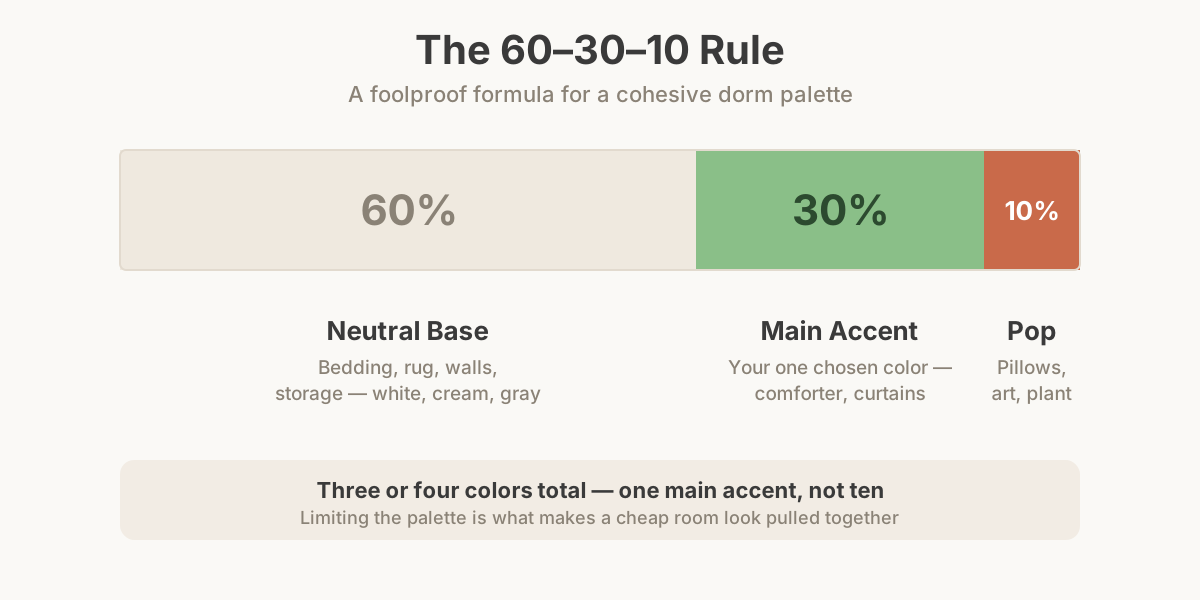
Every cohesive room follows roughly the same structure:
Neutral base (about 60%). The largest surfaces, bedding, rug, storage bins, curtains. Whites, creams, grays, and tans. This is the foundation that everything else sits on.
Main accent (about 30%). Your one chosen color, carried mainly by the comforter or the rug. This is the color someone would name if they described your room.
Pop color (about 10%). Small doses, throw pillows, art, a small lamp, a plant pot. This adds life without taking over.
That’s it. A neutral base, one accent, and a small pop. Three or four colors total.
Color Schemes That Work in a Dorm
Sage + Cream + Light Wood
Calm, current, and very forgiving. Sage green is soft enough to act almost like a neutral, so it’s hard to clash with. Pair it with cream bedding, a light wood or rattan accent, and a single warmer pop like terracotta. Works for almost any room and any roommate.
Navy + White + Warm Brass
Clean and a little sharp. Navy as the main accent on bedding, crisp white as the base, and small warm-metal touches (a brass-toned lamp, gold frames) to keep it from feeling cold. A reliable choice that reads as put-together without much effort.
Blush + Gray + Rose Gold
Soft and warm without being overly pink. Blush as the accent, light gray as the neutral base, and rose-gold or copper hardware as the supporting tone. Pairs well with warm string lights.
Rust + Cream + Olive
A warm, cozy, autumn-leaning palette. Rust or terracotta as the accent, cream as the base, and olive green as the supporting tone (a plant does this job for free). Feels lived-in and relaxed, great if you want the room to feel like a retreat.
Black + White + One Bold Color
Modern and high-contrast. A black-and-white base with a single bold accent, a deep emerald, a mustard yellow, a cobalt blue, carried through one or two pieces. Striking, but only works if you keep the bold color limited. One bold color is a statement; three is a mess.
Warm vs. Cool: Pick a Lane
The single most common reason a room feels subtly “off” is mixing warm and cool tones at random.
- Warm palettes (cream, rust, terracotta, mustard, warm wood) feel cozy, relaxed, and inviting.
- Cool palettes (white, sage, navy, gray, cool blue) feel calm, clean, and a little more open.
Neither is better, but pick one direction and stay in it. Warm-white string lights belong with a warm palette; cool-white lighting suits a cool palette. For how lighting interacts with your colors, see Dorm Room Lighting Ideas.
Making a Small Room Feel Bigger With Color
If your priority is making the room feel more open:
- Keep the largest surfaces light (white, cream, pale sage). Light colors reflect more light and recede visually.
- Save dark or bold colors for small accents only.
- Pair a light palette with a mirror near the window to bounce light, see Dorm Room Mirror Ideas.
- Avoid covering every wall and surface, negative space makes a small room breathe.
A dark, moody palette can look great, but it makes a small room feel smaller. That’s a fair trade if you want cozy over open, just go in knowing it.
Buy in the Right Order
Your color scheme is decided almost entirely by two things: the bed and the floor. They’re the biggest surfaces in the room.
- Bedding first. The comforter is the largest single block of color in the room. This is where your main accent usually lives. See the Dorm Room Bedding Guide.
- Rug second. The floor is the second-biggest surface. Pick a rug that supports your palette, see the Dorm Room Rug Guide.
- Decor last. Throw pillows, art, lamps, plant pots, all chosen to support the palette you already set.
Buying decor first is backwards. You end up with a pile of accent pieces and no anchor to hang them on.
Coordinate With Your Roommate
In a shared room, two separate color schemes on either side make the whole space feel split down the middle. You don’t have to match, but a compatible palette makes the room read as one space.
The easiest approach: agree on a shared neutral (both sides use white or cream as the base) and let each person pick their own accent within a warm or cool direction. The shared base ties the room together while still letting each side feel personal. For more on sharing a space, see Dorm Room Shared Living Tips.
Key Takeaways
- A color scheme matters more than individual pieces in a small room, coordinated cheap items beat mismatched expensive ones.
- Use the formula: neutral base (60%), one main accent (30%), one small pop (10%). Three or four colors total.
- Pick warm or cool and stay in it, mixing the two at random is the most common reason a room feels off.
- Light surfaces make a small room feel bigger, save dark and bold colors for small accents.
- Buy bedding and the rug first, they hold most of your palette; decor comes last.
- Coordinate a shared neutral with your roommate so the room reads as one space, not two.
Related Dorm Guides
- How to Make a Dorm Room Feel Like Home — the broader approach to a cohesive, personal room
- Minimalist Dorm Room Ideas — building a calm room around a tight neutral palette
- Dorm Room Bedding Guide — choosing the comforter that anchors your palette
- Dorm Room Rug Guide — picking a rug in the right size and color
- Dorm Room Lighting Ideas — matching light temperature to a warm or cool palette
- Dorm Room Ideas for Girls — full-room aesthetics built around a palette
- Dorm Room Ideas for Guys — color and design approaches for a guy’s room
Frequently Asked Questions
- A neutral base (white, cream, gray, or tan) plus one main accent color and one or two supporting tones is the most reliable formula. Popular combinations include sage green with cream and light wood, navy with white and warm brass, or blush with gray and rose gold. The key is limiting yourself to one main accent rather than using many competing colors.
- Three to four total: a neutral base, one main accent, and one or two supporting tones. More than that in a small room reads as cluttered. The 60-30-10 rule works well, roughly 60 percent neutral, 30 percent your main accent, and 10 percent a small pop color in pillows or art.
- Light, cool neutrals, white, cream, soft gray, and pale sage, reflect more light and make a small room feel more open. Keep the largest surfaces light and save darker or bolder colors for small accents. Pairing a light palette with a mirror near the window amplifies the effect.
- They don't need to match exactly, but a compatible palette makes a shared room feel cohesive instead of split down the middle. Agreeing on a shared neutral, or at least avoiding clashing main colors, is enough. Coordinate before move-in so neither person has to rebuy bedding later.
What is a good color scheme for a dorm room?
How many colors should a dorm room have?
What colors make a small dorm room look bigger?
Should roommates match their dorm room colors?