Dorm Room Bedding Guide: Twin XL Size, What to Buy, and What to Skip
Almost every dorm bed is Twin XL, not Twin. Here's exactly what bedding to buy for college, what's actually worth spending on, and what wastes money and space.
In this article
Most students get their dorm bedding wrong before they’ve even unpacked, and it usually comes down to one number: 80.
That’s the length, in inches, of a Twin XL mattress. Standard Twin sheets are only 75 inches long. That 5-inch difference means your fitted sheet will pop off the corners every time you move in your sleep. It seems minor until you’re remaking your bed at 2am the night before an 8am class.
Everything in this guide builds from that one detail: get the size right first, then make smart choices around it. For the full move-in packing list, see What to Pack for a Dorm Room.
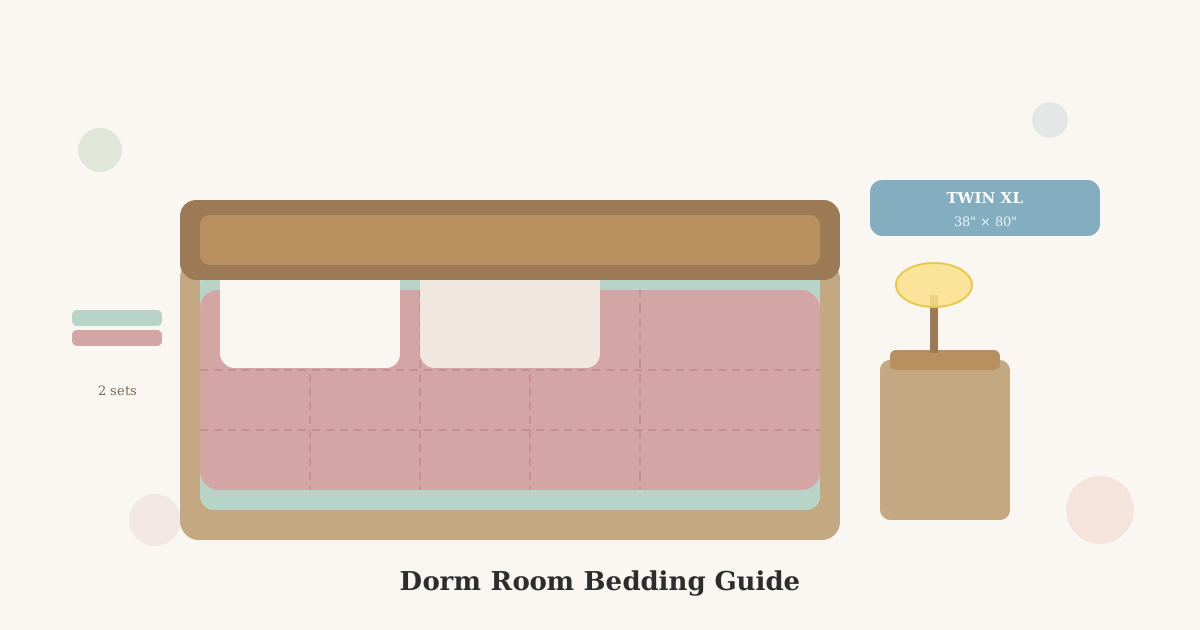
Quick answer: Almost all dorm beds are Twin XL, 38 inches wide by 80 inches long. Standard Twin is 38 by 75. The width is identical; the length is not. Buy Twin XL sheets specifically, two sets. Add a waterproof mattress protector and a 2-inch mattress topper. Choose comforter vs. duvet based on how often you’ll wash bedding. A small number of colleges use full beds. Confirm with your school’s housing office before ordering anything.
📄 Free printable: Download the Dorm Bedding Checklist (PDF) — print it and check off everything as you pack.
Twin XL vs. Twin: Why the 5-Inch Difference Actually Matters
Twin XL: 38” × 80”. Standard Twin: 38” × 75”. Same width, different length.
On a fitted sheet, those five missing inches mean the elastic doesn’t seat properly at the bottom corners. The sheet bunches and pulls loose throughout the night. It’s not a subtle difference. It’s one of the most common, easily avoidable frustrations of move-in week.
The fix is simple: buy Twin XL. The mistake is defaulting to regular Twin because it’s cheaper or what you had in high school. Major retailers stock Twin XL, especially from June through September. Online, filter by size and double-check the listed dimensions before checkout. See Twin XL Sheets Guide for a detailed breakdown of what to look for.
Exception: Apartment-style residence halls, graduate housing, and some older private-college dorms occasionally use full-size beds. Check your housing confirmation or email your RA before buying, one quick message saves a return shipping headache. For the full dimensions breakdown and every exception, see What Size Are Dorm Beds?
Bedding made a bigger difference than I expected. The mattress topper helped most, but having sheets that actually fit mattered too. I brought standard twin sheets from home thinking they’d work and they kept coming untucked every night. Getting bedding that was actually sized for the dorm bed was one of those small practical fixes that improved daily life immediately.
What You Need, and What to Look For in Each
Quick Bedding Checklist
| Item | Priority | Notes |
|---|---|---|
| Twin XL fitted sheets (2 sets) | Must-have | Two sets prevents laundry scramble |
| Waterproof mattress protector | Must-have | Basic hygiene; move-out insurance |
| Pillow (1–2) | Must-have | Medium-firm holds shape longest |
| Comforter or duvet | Must-have | Pick one; see comparison below |
| Mattress topper | High | Biggest comfort upgrade in the category |
| Extra blanket | Nice to have | Most students want one by October |
| Flat sheet | Optional | Many students skip this |
| Decorative pillows | Skip/wait | Wait until you see the room |
| Bed skirt | Skip | Blocks the most valuable storage in the room |
Sheets: Buy Two Sets
Two complete sets of Twin XL sheets, fitted sheet, flat sheet, and pillowcases, is the practical minimum. One set is on the bed; the other is clean and waiting.
Sheet material comparison:
| Material | Best For | Watch For |
|---|---|---|
| 100% cotton | Warm sleepers who want breathability | Wrinkles more; needs more careful drying |
| Cotton-poly blend | Most students; wrinkle-resistant, durable | Less breathable than pure cotton |
| Microfiber | Budget shopping | Traps heat; not ideal for warm sleepers |
| Bamboo/Lyocell | Hot sleepers wanting luxury feel | Higher cost; confirm Twin XL availability |
Thread count: The useful range is 200–400. Above 400, thread count is often a marketing figure, not a comfort indicator, some high-count sheets achieve the number by counting individual plies rather than threads per square inch. Focus on material and weave, not the number on the tag.
Pocket depth: Look for “deep pocket” fitted sheets. Dorm mattresses vary in thickness, and if you add a topper, a shallow-pocket sheet won’t stay on.
California Design Den Organic Cotton Percale Sheet Set (Twin XL)
If you sleep warm, this is the Twin XL set to get: 100% cotton in a percale weave, which breathes better than the microfiber most budget sets use. The deep pocket stays on a Twin XL mattress even with a topper added, and it holds up to repeated dorm laundry. Buy two sets so one is always clean on laundry day.
Pros
- 100% cotton percale — breathable for warm sleepers
- Deep pocket stays put on a Twin XL, even over a topper
- Crisp, cool hand feel that softens with washing
- Holds up to frequent dorm-machine washing
Cons
- Percale is crisp, not silky — microfiber fans may want softer
- Wrinkles more than a cotton-poly blend
- Costs more than a basic microfiber set
Pillow: One Good One Is Enough
One well-chosen pillow is sufficient. A second for reading or support is optional.
What to look for:
- Fill firmness: Medium-firm holds its shape longer than soft fill, which compresses flat within weeks of daily use
- Fill type: Down-alternative is the most practical choice for a dorm. It’s machine-washable, hypoallergenic, and far less expensive than real down. Real down runs warmer and lighter, but requires more careful cleaning
- Size: Standard (20” × 26”) fits the vast majority of sleeping pillows
- Protector: Put a pillow protector underneath your pillowcase. It keeps the pillow itself clean between washes and meaningfully extends its life
Beckham Hotel Collection Bed Pillows (Standard/Queen, 2-Pack)
The down-alternative, medium-firm pillow this section recommends, in a two-pack so you have one to sleep on and one for sitting up in bed. The fiber fill holds its loft instead of going flat in a few weeks, the cotton cover breathes for a warm room, and it's machine washable — the practical choice over real down for a dorm. One of the most-reviewed bed pillows on Amazon.
Pros
- Down-alternative fill holds a medium-firm loft, resists going flat
- Breathable cotton cover for warm dorm rooms
- Machine washable and hypoallergenic
- Two-pack; standard size fits standard pillowcases
Cons
- Two pillows is one more than a minimal setup needs
- Plush loft can feel tall for strict stomach sleepers at first
- Needs an occasional fluff to keep its shape
Comforter vs. Duvet: How to Decide
You need one, not both. Here’s the comparison:
| Factor | Comforter | Duvet + Cover |
|---|---|---|
| Washing | Wash the whole piece (needs large machine) | Wash just the cover weekly; insert occasionally |
| Convenience | Simpler, one piece, no assembly | Restuffing the insert after laundry takes time |
| Style changes | Fixed look | Swap covers for a different look without buying new |
| Cost | Usually cheaper | Cover adds cost; but covers are replaceable |
| Best if you… | Want simplicity | Wash bedding frequently and want easy maintenance |
On weight: Dorm room temperatures are often out of your control. Some rooms run hot; others stay cold. A medium-weight comforter handles most situations. You can layer a blanket on cold nights rather than sweating under something ultra-heavy.
For sizing rules, fill types, and what to skip, see the full guide to the Best Twin XL Comforters for Dorm Rooms.
Bedsure GentleSoft Down-Alternative Comforter (Twin XL)
A medium-weight down-alternative Twin XL that runs a true 92 inches long, so it covers the foot of the bed with drape to spare and washes in a standard dorm machine. Medium weight is the right call for a room you can't temperature-control — layer a throw on cold nights instead of sweating under a heavy winter comforter. In TechGearLab's test the Bedsure rated more durable than the cheaper inserts.
Pros
- True Twin XL at 92 inches — covers a lofted bed properly
- Down-alternative and fully machine washable
- Medium weight works year-round with a throw for cold nights
- Doubles as a duvet insert (8 corner tabs)
Cons
- Plain white shows stains — pick a color if you eat in bed
- Runs warm for very hot sleepers
- One piece to wash, unlike a duvet cover
Mattress Protector: Not Optional
Dorm mattresses have been used by multiple students before you. A waterproof mattress protector is a basic hygiene call, and some schools charge for mattress staining at move-out, either reason is sufficient.
A basic waterproof protector is inexpensive and adds almost no bulk. Layer it under your sheets (or under the topper if you’re adding one).
SafeRest Waterproof Mattress Protector (Twin XL)
A shared, previously-used dorm mattress makes a waterproof protector non-negotiable — it blocks spills, sweat, and allergens, and it saves you from mattress-staining charges at move-out. This SafeRest has a cotton-terry surface that feels like a fitted sheet, not crinkly plastic, stretches on over the mattress, and machine washes with your sheets. It's the category's most-reviewed pick.
Pros
- Waterproof membrane blocks spills, sweat, and allergens
- Cotton-terry top is quiet and undetectable — no plastic crinkle
- Fits like a fitted sheet; machine washable
- Very large review base
Cons
- Protects, doesn't pad — it won't soften a firm mattress
- Goes under the topper and sheet, so factor the total height for deep-pocket sheets
- Waterproof layer traps a little heat for very hot sleepers
Mattress Topper: The Highest-Impact Comfort Upgrade
If you want to meaningfully improve how the mattress feels, a padded mattress topper is a better investment than expensive sheets. Dorm mattresses vary in quality and have been compressed by years of use. A 2-inch memory foam topper in Twin XL size transforms sleep quality overnight.
For a full comparison of topper types and thickness recommendations, see Best Mattress Toppers for Dorm Beds.
Serta ThermaGel 2-Inch Cooling Memory Foam Mattress Topper (Twin XL)
Dorm mattresses are thin and compressed by years of use, so a 2-inch topper does more for your sleep than expensive sheets. This Serta ThermaGel is gel-infused memory foam sized specifically for a Twin XL dorm bed — the gel helps it sleep cooler than plain foam, and at around 9.5 lbs it's easy to carry in on move-in day. It's one of the most-reviewed dorm toppers on Amazon.
Pros
- 2 inches of memory foam noticeably softens a worn mattress
- Gel infusion sleeps cooler than plain memory foam
- Twin XL sized for dorm beds; light enough to carry
- Backed by a very large review base
Cons
- Memory foam still retains some heat — very hot sleepers may prefer a fiber pad
- New foam can have a faint off-gassing smell for a day or two
- No straps — pair with a deep-pocket fitted sheet to hold it in place
Extra Blanket: Low Priority, But You’ll Probably Want One
Most students don’t pack a throw blanket and end up ordering one by October, for the desk chair on a cold night, for the common room couch, or for layering when the heat hasn’t caught up yet. If space allows, bring a lightweight one.
What to Skip
Pre-packaged “dorm bedding sets.” They typically bundle items you don’t need, decorative shams, a bed skirt, possibly a flat sheet you may not use, while the actual sheet and comforter quality tends to be mediocre. You usually get more value by buying pieces separately.
More than one or two throw pillows. One decorative pillow is fine. Three means you’re moving them every night and stacking them somewhere. Dorm rooms are small, clutter compounds fast.
A bed skirt. The clearance under a dorm bed is among the most valuable storage space in the room. A bed skirt covers it and complicates access. Skip it entirely and use that space for under-bed bins. See Dorm Room Storage Ideas for the best way to use that space.
A top sheet. This one is optional. Plenty of students sleep directly under a comforter without a flat sheet. If that’s your preference, bring fitted sheets and pillowcases only. If you prefer the extra layer, bring it.
Electric blankets. Most residence hall policies prohibit them. Check your housing guidelines before buying.
White or very light-colored sheets. They show every stain and require more careful washing. Darker solids or patterns are far more practical.
Laundry Notes for Dorm Bedding
- Wash sheets every one to two weeks, once a week if you can manage it
- Most dorm washers can handle a comforter. Check the machine’s capacity rating before loading a full-size one
- Warm or hot water on sheets and pillowcases sanitizes effectively; cold water is fine for delicate items
- Dry everything completely before putting it back on the bed, even slightly damp bedding develops a mildew smell within a day or two
For a full walkthrough of dorm laundry from start to finish, see How to Do Laundry in College.
Key Takeaways
- Buy Twin XL, not Twin. The 5-inch length gap will cost you sleep.
- Two sheet sets prevent the laundry-day scramble. It’s worth the small extra cost.
- Comforter or duvet, decide based on how much laundry complexity you can tolerate.
- A waterproof mattress protector is basic hygiene and move-out insurance.
- A 2-inch mattress topper is the single highest-impact bedding upgrade.
- Skip pre-packaged bedding sets. Buy only what you’ll actually use.
- Skip the bed skirt. It blocks the most valuable storage space in the room.
Related Dorm Guides
- Twin XL Sheets Guide, detailed breakdown of what to look for in Twin XL sheets
- Best Mattress Toppers for Dorm Beds, comparison at every price point
- What to Pack for a Dorm Room, full packing list and timeline
- College Dorm Move-In Checklist, category-by-category checklist for move-in day
- Complete Dorm Room Checklist for Freshmen, the full shopping breakdown with cost estimates
- How to Do Laundry in College, so your bedding stays clean all semester
- Dorm Room Storage Ideas, including why to skip the bed skirt and use under-bed space instead
- How to Set Up a Dorm Room for Under $200, bedding on a tight budget
Frequently Asked Questions
- Almost all dorm beds are Twin XL, 38 inches wide by 80 inches long. Standard Twin sheets are 75 inches long, which is 5 inches too short and will pull off the mattress. Always confirm with your school, but Twin XL is the standard. Buy Twin XL sheets, not Twin.
- Two sets. One on the bed, one clean set ready to rotate in on laundry day. This prevents you from being stuck waiting on laundry before you can make your bed, and it means you always have a clean set available.
- Either works, but a duvet with a cover has a practical advantage: you can wash the cover without washing the entire duvet insert. This is easier in a dorm laundry room where machine capacity is limited. A comforter is simpler, one piece, no insert to stuff. Both are fine choices.
- Almost never. Most dorms provide a bed frame and mattress only, sometimes a mattress cover. Everything else (sheets, pillow, comforter, blanket) you bring yourself. Check your housing welcome materials to confirm, but plan to bring all of your own bedding.
What size sheets do I need for a dorm bed?
How many sets of sheets should I bring to college?
Do I need a comforter or a duvet for a dorm room?
Does the dorm provide pillows and bedding?