How to Keep Your Dorm Room Cool Without AC (Real Fixes)
How to keep a dorm room cool without AC through the August heat — fans, airflow timing, and window tricks that actually lower the temperature.
In this article
Move-in day in late August means walking into a dorm room that’s been closed up all summer with no airflow. Buildings that were designed decades ago weren’t built for the heat load of two people, two laptops, a mini fridge, and a gaming console all running simultaneously. Add a west-facing window in the afternoon and the room temperature climbs fast.
The good news is that dorm rooms are small, which means targeted cooling strategies work well. You don’t need to cool a house. You need to cool one small room and one bed.
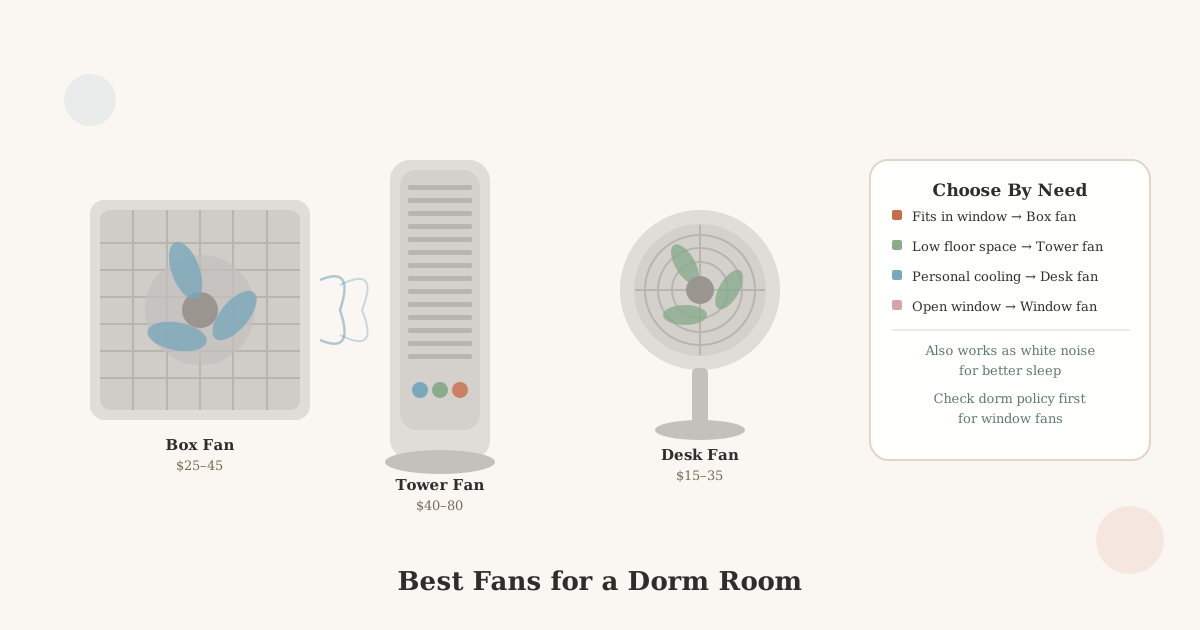
Quick answer: The most effective combination without a dedicated AC unit: blackout curtains on west or south-facing windows (blocks afternoon solar heat), a 20-inch box fan in the window pulling cool night air in after 10pm (lowers room temperature by 8–12°F overnight), and a tower fan aimed at your bed for sleep. Swap to moisture-wicking or cotton percale bedding. These four changes cost $50–$120 and make a measurable difference.
Why Dorm Rooms Run Especially Hot
Before fixing the problem, it helps to understand why it’s worse than you expect:
Heat sources you add to the room:
- A laptop running under load generates 40–100W of heat
- A desktop setup with a monitor adds another 80–200W
- A mini fridge cycles on and off but contributes a continuous heat load
- Two people in a small room add roughly 200W of body heat combined
- Phone chargers, speakers, and LED strips add smaller amounts
Building factors you can’t change:
- Older dormitories are often poorly insulated
- HVAC systems are designed for average loads, not maximum student configurations
- Many dorm rooms have a single vent serving a zone, not the individual room
- Upper floors and south or west-facing rooms run significantly hotter than others
Your goal is to remove as much heat as you can while blocking new heat from coming in.
Strategy 1: Block Afternoon Sun With Blackout Curtains
If your window faces west or south, you’re getting direct sunlight in the afternoon, the hottest part of the day. An uncovered window acts like a magnifying glass for heat.
Blackout curtains block solar heat gain. In a room with direct afternoon sun, the difference between no curtains and blackout curtains can be 8–12°F by 4pm. That’s the single highest-leverage change you can make.
What to get: Blackout curtains rated for thermal insulation. The curtain needs to be wide enough to fully cover the window without gaps on the sides, heat gets in at the edges. Most dorm windows are 36–48 inches wide; measure before ordering.
How to hang without drilling: Command large adhesive hooks on the wall above the window support lightweight curtain rods. A tension rod that fits inside the window frame is the simplest option and requires nothing mounted to the wall.
→ Shop blackout curtains on Amazon
→ Shop tension curtain rods on Amazon
See also: Best Blackout Curtains for Dorm Rooms
Strategy 2: Night Ventilation, the Most Effective Cooling Method
In most of the US, nighttime temperatures drop 15–25°F below the daytime high. If your outdoor temperature at midnight is 65°F and your room is 78°F, you have a 13-degree advantage you’re not using if your windows are closed.
The night ventilation system:
- After 10pm (or whenever outdoor temperature drops below your room temperature), open the window fully
- Place a box fan in the window facing outward. This pulls warm room air out rather than just mixing it
- Open your door slightly if you’re comfortable doing so. This creates cross-ventilation that moves air through the room rather than just recycling it
- Run this until you go to sleep, then close the window and run a fan on your bed
A 20-inch box fan in a window at night can drop a room from 78°F to 67°F within two hours if the outdoor air is cool enough. This is the single most effective cooling method available without a dedicated AC unit.
Check your school’s policy on window fans, some high-rise dorms don’t permit them for safety reasons. If window fans are prohibited, a box fan on the floor near the window (even with it open) moves air reasonably well.
→ Shop 20-inch box fans on Amazon
Strategy 3: Directional Fan for Sleeping
Once your room is cooled down from night ventilation, close the window and switch to a fan pointed directly at your bed for sleeping. Moving air over your skin has a wind chill effect, even at 72°F, a fan blowing at you feels meaningfully cooler.
A tower fan on its lowest setting pointed at your bed is quiet enough for sleep and keeps air moving across your body throughout the night. If you run hotter than your roommate, a small desk fan on your nightstand gives you personal airflow without disturbing them.
→ Shop quiet tower fans on Amazon
Strategy 4: Swap Your Bedding
Standard dorm bedding, thick polyester comforters, microfiber sheets, traps heat. In late August and September, this bedding makes you significantly hotter than you’d be with breathable alternatives.
What actually keeps you cool:
- Cotton percale sheets, tightly woven but breathable, smooth, and cool to the touch. Higher thread count isn’t always better; percale weave matters more than thread count for cooling.
- Bamboo or linen sheets, both are more moisture-wicking than cotton and feel noticeably cooler in humid conditions
- A lightweight cotton or gauze blanket instead of a heavy comforter. Swap out September through October, then switch back when it cools down
- A cooling mattress topper, gel memory foam or latex toppers sleep cooler than standard foam
What to avoid for warm weather: Heavy down comforters, thick microfiber fleece blankets, or any bedding with a high tog/warmth rating. These are great for winter but actively make August and September uncomfortable.
→ Shop cooling sheets for twin XL dorm beds on Amazon
See also: The Complete Dorm Bedding Guide
Strategy 5: Reduce Heat Sources in the Room
Since much of your heat load comes from electronics and two people in a small space, reducing unnecessary heat generation helps at the margin:
- Close your laptop lid when not in use, a laptop sitting idle with the screen off generates almost no heat; the same laptop running with the screen on generates 30–60W
- Unplug chargers and adapters when not in use, all wall adapters generate heat even when nothing is connected
- Move the mini fridge to the coolest part of the room, away from direct sun and with space behind it for the compressor to vent; a fridge that can’t ventilate runs hotter and heats the room more
- Use LED lighting only, incandescent and halogen bulbs put out substantial heat; LEDs run cool
None of these changes alone has a large effect, but together they reduce the heat load the room generates by 10–20%, which is meaningful in a small sealed space.
Strategy 6: Manage Your Own Body Temperature
Sometimes the room is unavoidably warm and you’re working with what you have:
- A cold damp cloth on the back of your neck or wrists drops your perceived temperature significantly, the skin over major blood vessels is effective for whole-body cooling
- A hot shower before bed sounds counterintuitive but the vasodilation that follows a hot shower helps your body cool down, many people find they fall asleep faster after a warm shower than a cold one
- Stay hydrated, being even mildly dehydrated makes you feel warmer
- Avoid exercise within two hours of sleep, exercise raises core body temperature for several hours
The Full Cooling System (Ranked by Impact)
| Strategy | Cost | Impact |
|---|---|---|
| Night window ventilation with box fan | $25–$45 | 🔥🔥🔥🔥 Very high |
| Blackout curtains on sun-facing windows | $25–$45 | 🔥🔥🔥🔥 Very high |
| Cooling-weave bedding (percale or bamboo) | $30–$65 | 🔥🔥🔥 High |
| Tower/desk fan aimed at bed for sleep | $15–$60 | 🔥🔥🔥 High |
| Reduce electronics heat load | $0 | 🔥🔥 Moderate |
| Body temperature management | $0 | 🔥🔥 Moderate |
Key Takeaways
- Blackout curtains on west and south-facing windows block afternoon solar heat, one of the highest-impact changes you can make.
- Night ventilation with a box fan pulling air out through the window can drop a room 10+ degrees overnight. Use it every night the outdoor temperature cooperates.
- Move air over your body while sleeping, not just around the room, a fan pointed at your bed has a direct cooling effect on skin temperature.
- Swap your bedding in August and September: cotton percale or bamboo instead of polyester and fleece.
- Reduce electronics load when not in use, laptops, chargers, and monitors all generate measurable heat in a small room.
For fan options compared in detail, see Best Fans for a Dorm Room. For bedding that sleeps cool, see The Complete Dorm Bedding Guide.
Frequently Asked Questions
- Several things work against you: older dorm buildings have poor insulation, many rooms only have one small AC vent shared between two zones, rooms with electronics (laptops, monitors, game consoles) generate significant heat, and many dorm windows face west or south and take direct afternoon sun. The AC system is often designed for a base load, not for a room with two laptops, a mini fridge, a gaming console, and two people living in it.
- The research-supported range for sleep is 65–68°F (18–20°C). Most dorm rooms in late August and September run 72–78°F without intervention, too warm to sleep comfortably. Getting a room to 68°F without a dedicated AC unit usually requires a combination of night ventilation, a fan pointed at the bed, and cooling-focused bedding.
- Portable AC units are prohibited in most dorms because they draw significant electrical current and often require a window exhaust hose, both of which create safety and facility management issues. Check your housing handbook. If you're in one of the minority of schools that permit them, a 5,000–8,000 BTU portable unit covers a standard dorm room. Most students, however, need to work with fans and passive cooling strategies.
- Yes, significantly. A room with south or west-facing windows can be 8–12°F warmer than one with no direct sun exposure. Blackout curtains block solar heat gain during peak afternoon hours. The difference between an uncovered window and blackout curtains in direct afternoon sun is measurable within an hour, one of the highest-impact changes you can make.
Why is my dorm room so hot even with AC?
What temperature should a dorm room be for sleeping?
Can I use a portable AC unit in a dorm room?
Does closing the blinds actually help keep a dorm room cool?
%20%E2%80%94%20How%20to%20keep%20a%20dorm%20room%20cool%20without%20AC%20through%20the%20August%20heat%20%E2%80%94%20fans%2C%20airflow%20timing%2C%20and%20window%20tricks%20that%20actually%20lower%20the%20temperature.)