
Easy Dorm Room Meals You Can Make With No Kitchen
Dining halls close and takeout adds up fast. Here are real meals you can make in a dorm room with just a microwave, a kettle, and a mini fridge.
In this article
The dining hall closes at 8, you have a paper due, and you’re hungry at 10:30. That moment, repeated a few times a week, is how college students end up spending a fortune on late-night delivery. The fix isn’t willpower. It’s having a few things on a shelf so you can actually make something instead.
You don’t need a kitchen. A microwave, a kettle, and a mini fridge cover a surprising number of real meals. For setting up the snack side of this, see How to Set Up a Dorm Room Snack Station, and for the kettle itself, see Dorm Room Coffee Setup.
I always kept granola bars, instant oatmeal, and microwave popcorn in my room, and honestly they saved me more times than I can count. Dining halls close, finals happen, and you get hungry at weird hours. Having a few things I could turn into an actual meal meant one less decision on a hard day, and a lot less money spent on delivery.
Quick answer: Keep a small base of shelf-stable staples (oatmeal, instant rice or noodles, mac and cheese, peanut butter, tortillas, canned tuna or beans) plus fridge basics (eggs, yogurt, cheese, produce). With a microwave, kettle, and mini fridge you can build real meals around a base, a protein, and something fresh. Pick two or three go-to meals, keep their ingredients always stocked, and grab shelf-stable extras from the dining hall to stretch your meal plan.
The Three Appliances That Do the Work
Almost every meal here needs only:
- A microwave — mug meals, reheating leftovers, steaming vegetables, baked potatoes. (Many dorms provide a shared one on each floor if you can’t have a personal unit.)
- An electric kettle — anything that needs hot water: oatmeal, ramen, instant soups, couscous, tea.
- A mini fridge — eggs, yogurt, cheese, deli meat, produce, leftovers.
Check your school’s appliance policy before buying. Hot plates and open-coil toasters are banned almost everywhere, but these three are usually fine. See Best Mini Fridge for a Dorm Room for picking one that fits.
The Pantry Starter Kit
Stock these and you can always make something:
Shelf-stable bases: instant oatmeal, instant rice, ramen or rice noodles, microwave mac and cheese, whole-grain tortillas, bread.
Shelf-stable proteins: canned tuna or chicken, canned beans, peanut butter, single-serve protein packets.
Fridge basics: eggs, Greek yogurt, shredded cheese, butter, a vegetable or two, fruit.
Flavor: salt, pepper, a hot sauce, soy sauce, a seasoning blend. These turn bland staples into something you actually want to eat.
A pantry like this costs very little and covers weeks of meals. For a full shopping approach, the First Apartment Grocery List scales down well to a dorm.
The Meals
Breakfast
Overnight oats. Oats + milk or yogurt + a spoon of peanut butter, stirred in a jar the night before. No cooking at all. Add fruit in the morning.
Microwave mug omelet. Crack two eggs into a mug, add a splash of milk, cheese, and any chopped vegetable. Microwave in 30-second bursts, stirring between, until set. Two minutes, real protein.
Yogurt bowl. Greek yogurt, granola, fruit, a drizzle of honey or peanut butter. Zero appliances.
Lunch
Tuna or PB wrap. Tortilla + canned tuna (or peanut butter and banana) + whatever fresh thing you have. Filling, no heat needed.
Quesadilla. Tortilla, shredded cheese, fold in half, microwave 45 seconds. Add beans or leftover chicken to make it a real meal.
Loaded ramen. Cook the noodles with the kettle, then upgrade: stir in an egg while hot, add frozen or fresh vegetables and a dash of soy sauce. Ramen goes from snack to meal with two additions.
Dinner
Microwave baked potato. Pierce a potato, microwave 5 minutes, top with cheese, beans, or yogurt-as-sour-cream. Cheap, filling, genuinely good.
Rice bowl. Instant rice + canned beans or rotisserie chicken (grab one on a grocery run) + a vegetable + hot sauce. The most flexible dinner on this list.
Mac and cheese, upgraded. Microwave mac with frozen peas or a handful of spinach stirred in, plus extra cheese. Takes it from dorm-staple to actual dinner.
Something Fresh
Pair any of the above with fruit, a bagged salad, baby carrots, or a vegetable. The fresh element is what keeps a dorm diet from being entirely beige, and it’s the easiest part to skip and the most worth keeping.
Eat Better Without Trying Hard
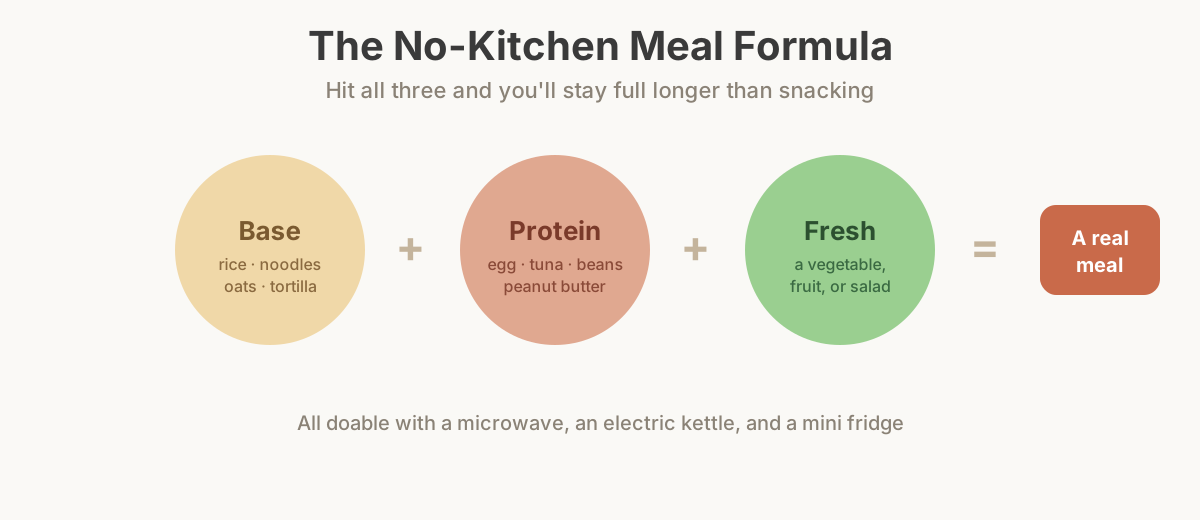
The trick to eating reasonably well in a dorm is structure, not effort. Build each meal from three parts:
- A base — rice, noodles, oats, a tortilla, a potato.
- A protein — egg, tuna, beans, peanut butter, chicken.
- Something fresh — a vegetable, fruit, or salad.
Hit all three and you’ll stay full longer than you would grazing on snacks, which is what actually saves money. Snacking feels cheaper but rarely satisfies, so you end up eating again an hour later.
Use the Dining Hall as a Pantry
When you do swipe into the dining hall, it’s not just one meal, it’s a chance to stock up for later (where allowed). Grab a piece of fruit, a bagel, a hard-boiled egg, or packets of peanut butter and oatmeal. One swipe becomes two meals, and your meal plan stretches a lot further across the semester. For more money strategy, see How to Budget in College.
Keep It Sustainable
The reason people abandon dorm cooking isn’t lack of recipes, it’s friction:
- Keep one mug, one bowl, one plate, and a fork clean and ready. A pile of dirty dishes is what makes you give up and order out.
- Rinse immediately after eating. Crusted dishes are 10x harder later.
- Pick two or three default meals you can make on autopilot and always keep their ingredients stocked. Decision fatigue drives takeout; defaults remove the decision.
For keeping food fresh and organized, see How to Set Up a Dorm Room Snack Station and How to Keep Your Dorm Room Smelling Fresh (food storage is a big part of dorm odor).
Key Takeaways
- A microwave, kettle, and mini fridge cover almost every meal here, confirm each is allowed before buying.
- Stock a small base of staples (oats, rice, noodles, mac, peanut butter, tortillas, canned tuna and beans) so you can always make something.
- Build meals from a base + a protein + something fresh to stay full longer and eat better.
- Grab shelf-stable extras from the dining hall to turn one swipe into two meals.
- Keep dishes clean and ready and rinse immediately, friction is what drives people back to takeout.
- Pick two or three go-to meals and keep their ingredients always stocked to beat decision fatigue.
Related Dorm Guides
- How to Set Up a Dorm Room Snack Station — organizing the food side of your room
- Dorm Room Coffee Setup — the kettle that powers half these meals
- Best Mini Fridge for a Dorm Room — choosing a fridge that fits your space
- How to Budget in College — where food fits in a student budget
- First Apartment Grocery List — scaling up when you move off campus
- How to Keep Your Dorm Room Smelling Fresh — storing food without the odor
Frequently Asked Questions
- With a microwave, kettle, and mini fridge you can make overnight oats, microwave oatmeal, mug omelets, ramen upgraded with egg and vegetables, microwave mac and cheese, tuna or peanut butter wraps, microwave baked potatoes, quesadillas, and rice bowls. Adding a few fresh ingredients to shelf-stable bases covers most of what you'll want day to day.
- Three cover almost everything: a microwave, an electric kettle, and a mini fridge. The kettle handles anything needing hot water, the microwave handles mug meals and reheating, and the fridge stores perishables. Check your school's appliance policy first, hot plates and open-coil toasters are banned in most dorms, but these three are usually allowed.
- Build each meal around a base, a protein, and something fresh rather than relying on snacks. Keep yogurt, eggs, fruit, bagged salad, and a protein source in your fridge, and pair them with shelf-stable bases like oatmeal, rice, or whole-grain tortillas. Grabbing fruit and protein from the dining hall for later also helps you eat better between meals.
- Use your meal plan fully, keep a small stock of shelf-stable staples so you're never forced into takeout, and grab extra shelf-stable items from the dining hall when allowed. A few dollars of oatmeal, rice, tuna, and peanut butter covers far more meals than the same money spent on one delivery order.
What meals can you make in a dorm room without a kitchen?
What appliances do I need to cook in a dorm room?
How do I eat healthy in a dorm room?
How can I save money on food in college?