
Best Fans for a Dorm Room in 2026: Box Fan vs. Tower Fan vs. Desk Fan
Dorm rooms in early fall are warm and most have limited AC. Here's which type of fan works best for a dorm room, and what to look for at each size.
In this article
The first month of college, late August through September, is when dorm rooms are at their worst for temperature. Buildings with aging HVAC, early fall heat, and rooms full of electronics all combine to make a dorm room significantly warmer than comfortable.
A fan is one of the most practical things you can bring. Here’s which type fits which situation. For the full list of what to bring to a dorm, see What to Pack for a Dorm Room.
The first thing I remember about move-in day was the heat. Everyone was carrying boxes up and down the hall and the building hadn’t fully cooled down from the summer. The room felt stuffy for the first few days. A fan was one of the first things I added and it made the space significantly more livable for the first few weeks.
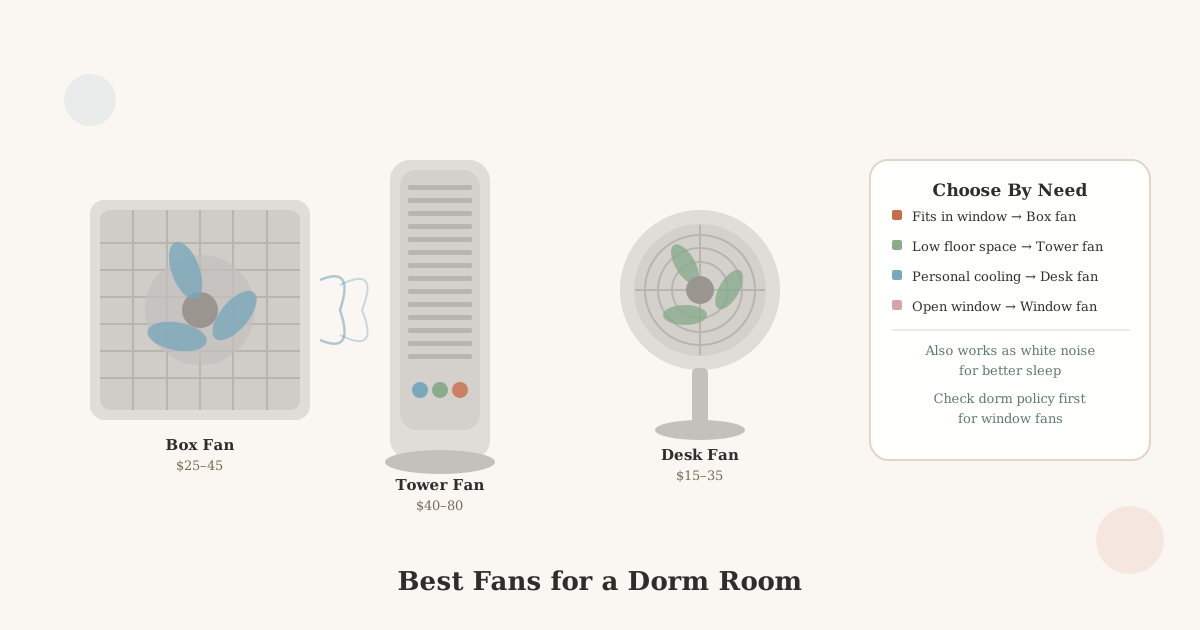
Quick answer: For most dorm situations, a tower fan or box fan covers it. A box fan ($25–$45) gives the most airflow and fits in windows for fresh air exchange. A tower fan ($40–$80) takes up less floor space and oscillates, better for small rooms where you want air circulating throughout rather than pointed in one direction. Add a desk fan if you run warm while studying but your roommate doesn’t. Check your school’s policy before bringing a window fan.
Why Fans Matter More Than You’d Think
Beyond cooling, a fan in a dorm room:
- Acts as white noise, the steady hum masks hallway noise, roommate sounds, and neighbor noise. Many students run a fan primarily for this reason, not cooling.
- Improves air circulation, dorms with windows that open benefit from cross-ventilation with a fan assisting the airflow.
- Reduces stuffiness, moving air feels less uncomfortable than still air, even at the same temperature.
A fan that sits in the corner and runs quietly also doubles as a sleep aid without any additional investment. Check noise level ratings (measured in decibels) if quiet operation matters for your situation.
Which Fan for Which Situation
| Situation | Best Fan Type |
|---|---|
| Room gets very hot; windows open and allowed | Window fan or box fan in window |
| Small room, limited floor space | Tower fan |
| Need cooling at your desk only | Desk/personal fan |
| Primarily need white noise for sleeping | Box fan (loudest/steadiest) or tower fan (quieter) |
| Your roommate runs cold; you run warm | Desk fan pointed at your station only |
| Want air circulating throughout the whole room | Tower fan with oscillation |
| Flying to school | Buy cheap box fan locally; leave at year’s end |
Option 1: Box Fan ($25–$45)
The classic dorm fan. Box fans are square (typically 20 inches), powerful, and versatile. They can sit on the floor, on a dresser, or fit in a window to pull outside air in.
Best for: Students who want maximum airflow, have a window that opens, or need white noise at a certain volume level.
Pros:
- Strong airflow relative to size and cost
- Fits in most standard windows for active ventilation
- Usually the most affordable option
- Loud enough to function as solid white noise
Cons:
- Square and somewhat bulky to store at the end of the year
- Not as adjustable for direction without repositioning the whole unit
- Noisier than tower fans at the same airflow setting
→ Shop 20-inch box fans on Amazon
Option 2: Tower Fan ($40–$80)
Tower fans are tall and narrow (usually 30–40 inches tall, 10–12 inches wide), which makes them practical for small dorm rooms where floor space is limited. They oscillate side to side and typically include a remote control.
Best for: Students who want a fan that takes up minimal floor space, circulates air throughout the room, and looks cleaner in a smaller setup.
Pros:
- Small floor footprint, fits beside a desk or in a corner without blocking paths
- Oscillation moves air around the room rather than in one direction
- Remote control lets you adjust from bed without getting up
- Quieter on low settings than box fans
- Cleaner look for a decorated room
Cons:
- More expensive than box fans
- Can’t go in a window
- Slightly less raw airflow than a comparably priced box fan
Option 3: Desk or Personal Fan ($15–$35)
Small fans (6–10 inches) that sit on a desk or dresser and cool one person rather than a whole room. Some are USB-powered; others use a standard outlet.
Best for: Students who run warm at a desk while studying, or who want personal cooling without affecting a roommate who runs cold.
Pros:
- Inexpensive
- Very compact, fits on a desk or nightstand without using meaningful space
- USB models can be powered from a laptop or USB port on a power strip
- Easy to pack and move
Cons:
- Moves much less air than a box or tower fan
- Not effective for cooling a whole room
- Not useful as a primary sleep fan if you need significant white noise or cooling
→ Shop personal desk fans on Amazon
Option 4: Window Fan ($35–$60)
Window fans mount directly in a window frame and exchange hot room air for cooler outside air, more effective than any floor fan at actually reducing room temperature rather than just moving the same warm air around.
Best for: Students in rooms that get genuinely hot (not just stuffy), with windows that open and a school policy that permits window fans.
Check first: Some dorms don’t allow window fans, especially high-rise buildings or dorms with sealed windows. Confirm your school’s policy before buying one.
Pros:
- Most effective option for actually lowering room temperature
- Pulls fresh outside air in (or pushes warm inside air out) rather than recirculating
Cons:
- Not permitted in all dorms
- Only useful if your windows open
- Less versatile than a box or tower fan
What to Look For
Noise level. Fans are rated in decibels (dB). Under 50 dB is quiet enough for sleeping. Some manufacturers list noise levels in product specs. Check before buying if quiet operation is important.
Oscillation. A fan that moves air around the room is more effective for general room cooling than one pointed in a single direction.
Speed settings. At minimum, look for 3 speeds: low for sleeping, medium for general use, high for hot days.
Sleep timer. Useful if you want the fan to turn off after you fall asleep rather than running all night.
Remote control. Convenient on tower fans, adjust speed or direction from bed without getting up.
Space and Storage
At the end of the year, box fans pack flat and easily. Tower fans need their original box or a sleeve bag. Desk fans fit in almost anything. If you’re flying to school or on a tight budget, a cheap box fan bought locally and left at the end of the year is more practical than shipping one.
Key Takeaways
- A fan serves two purposes: cooling and white noise, both valuable in a dorm.
- Box fans are the most powerful and affordable option, and fit in windows for actual air exchange.
- Tower fans take up the least floor space and oscillate, right for small rooms with limited floor area.
- Check your school’s policy before buying a window fan, not all dorms allow them.
- Under 50 dB is the noise threshold to look for if you’re using a fan for sleeping.
- If you’re flying to school, buy a cheap fan locally and leave it at year’s end rather than shipping.
Related Dorm Guides
- How to Keep Your Dorm Room Cool, full guide to ventilation, cooling strategies, and bedding choices for warm rooms
- How to Sleep in a Dorm Room, noise management and sleep setup in a shared space
- What to Pack for a Dorm Room, full packing list including room comfort items
- College Dorm Move-In Checklist, room comfort category including fans
- Dorm Room Shared Living Tips, coordinating temperature preferences with a roommate
- Best Mini Fridge for a Dorm Room, another room comfort essential to coordinate with your roommate
- How to Set Up a Dorm Room for Under $200, where a fan fits in a tight budget
Frequently Asked Questions
- Yes, fans are almost universally permitted in dorm rooms. Unlike space heaters (which are often prohibited due to fire risk), fans are considered a standard appliance. The only rare exception would be a building with central AC and a policy against any appliances that add load to the electrical system. Check your housing handbook if you're unsure, but fans are nearly never restricted.
- A 20-inch box fan or a mid-size tower fan (around 30–36 inches) works well for most dorm rooms. Box fans fit in a window to pull in outdoor air. Tower fans are better for floor use with limited space. Desk fans are fine for personal cooling at a study station. The right size depends on where you plan to use it and how much floor space you have.
- Yes, a fan's steady background sound acts as white noise and masks irregular sounds from hallways, roommates, and neighboring rooms. Many students use a fan primarily as a sleep aid rather than for cooling. The consistent hum fills in acoustic gaps that make sudden sounds (doors, footsteps, conversations) disruptive.
- Check your school's policy first. Some dorms allow window fans; others do not (especially high-rise buildings or dorms with sealed windows). If permitted, a window fan pulls in cooler outside air at night and can significantly reduce room temperature. If your windows don't open or window fans are prohibited, a tower or desk fan moving room air is your option.
Are fans allowed in dorm rooms?
What size fan is best for a dorm room?
Does a fan help with dorm room noise?
Can I put a box fan in my dorm room window?