
Finals Week Survival Guide for College Students
Finals week is won in the two weeks before it, not the all-nighter the night before. Here's a realistic plan for studying, sleeping, and staying sane.
In this article
Finals week feels like an endurance event, but it’s mostly won or lost in the two weeks before it. The students who seem calm during finals aren’t smarter, they front-loaded the work, mapped everything out, and protected their sleep. The students pulling 3am all-nighters are usually paying for two weeks of avoidance in one miserable burst.
You can choose which version you are, and the choice mostly comes down to planning early. For keeping your study space functional through it all, see Dorm Room Desk Organization.
My desk became a dumping ground within the first two weeks of every term, and finals were impossible until I dealt with it. Once I had a clear surface and a system for what went where, I could actually sit down and start working without the mess pulling my attention. Getting organized before finals mattered more than any single study trick.
📄 Free Printable
Download the Finals Week Dorm Survival Checklist (PDF) →
A day-by-day plan to map your exams, protect your sleep, and keep the basics running so finals week doesn’t run you. No email required.
Quick answer: Map every exam, paper, and project two weeks out and prioritize by weight and weakness, not by what’s comfortable. Study in focused 45–50 minute blocks with real breaks, and protect your sleep, especially the night before each exam, because sleep is when memory consolidates. Kill phone distractions before relying on willpower, and keep eating, hydrating, and moving. The all-nighter is a sign of bad planning, not dedication.
Finals Week Starts Two Weeks Early
The single biggest predictor of a calm finals week is when you start. Two weeks out, before the panic, do this:
List everything. Every final, paper, project, and presentation, with its date and how much it’s worth. Put it somewhere you’ll see it every day. A wall calendar or whiteboard beats a phone app you forget to open, see Dorm Room Command Center for setting one up.
Once it’s all visible, the week stops being a vague cloud of dread and becomes a finite list of specific tasks with deadlines. That shift alone lowers the stress significantly, because most finals anxiety is fear of the unknown, not the work itself.
Prioritize by Weight and Weakness
Here’s the trap: students study what feels good, the subjects they already understand, because progress is satisfying there. But that’s the opposite of what raises your grade.
Rank your exams on two axes:
- How much is it worth? A 40%-of-grade final matters more than a 10% quiz.
- How shaky are you? Where are you actually weak?
Spend the most time where high stakes and your weak spots overlap. One focused hour on your worst-but-heaviest subject moves your GPA more than three comfortable hours reviewing material you’ve already mastered. It feels worse and works better.
Study in Focused Blocks
Marathon study sessions feel productive and mostly aren’t. After about an hour of unbroken focus, retention drops off a cliff.
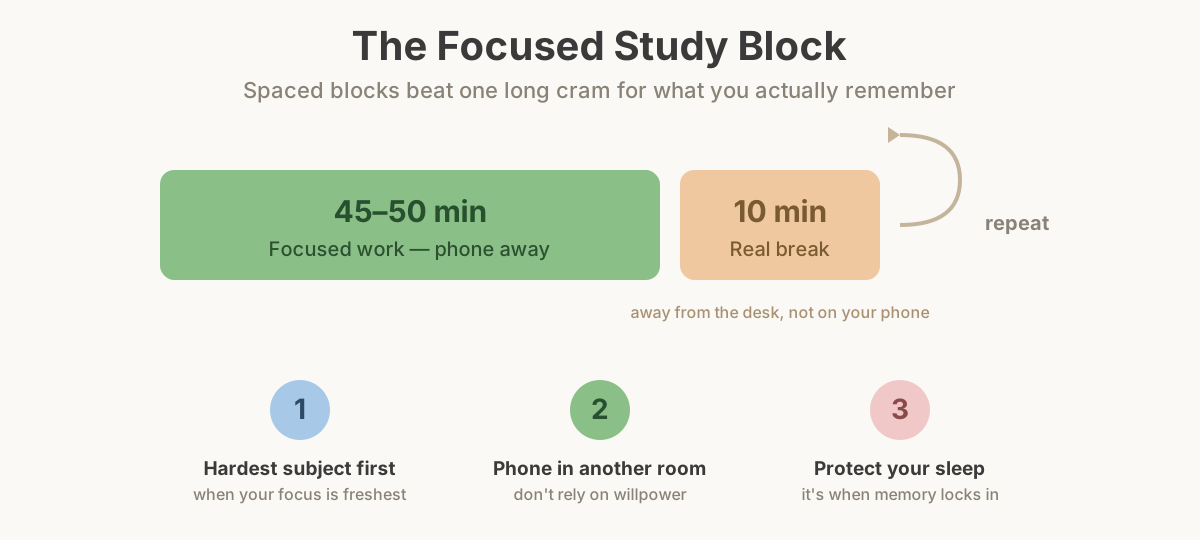
Work in focused blocks: roughly 45–50 minutes of real focus, then a genuine 10-minute break, away from the desk, not just switching to your phone at the desk. This rhythm (a version of the Pomodoro technique) keeps attention sharp and dramatically improves what you actually remember.
Spaced, focused blocks across two weeks beat one six-hour cram, because spaced repetition is literally how information moves into long-term memory. The cram feels like more effort; the spacing produces more recall.
Sleep Is a Study Strategy
This is the one most students get wrong. Sleep isn’t time taken away from studying, it’s when your brain consolidates everything you studied into memory. Skip it and you erase part of the work you just did.
- Protect the night before every exam without exception. A rested brain recalls more and reasons more clearly than an exhausted one with two extra cramming hours.
- Keep your sleep reasonably consistent through the whole week, not just the night before.
- If your roommate’s schedule or dorm noise threatens your sleep during finals, see How to Sleep in a Dorm Room and consider a white noise machine.
The all-nighter feels like dedication. It’s actually self-sabotage with extra steps.
Kill Distractions Before You Rely on Willpower
Your phone is the biggest threat to a focused study block, and willpower is a bad defense against it. Remove the friction instead:
- Put your phone in a drawer or another room during study blocks. Out of sight genuinely helps.
- Use a website blocker on your laptop for social media during study time.
- Study where your brain expects to work — a library, a study room, a cleared desk, not your bed (your bed should mean sleep, not stress).
Managing the environment is far easier and more reliable than fighting distraction moment to moment. For a desk setup that supports focus, see Dorm Room Desk Setup.
Keep the Basics Running
Finals week falls apart when the basics slip and students try to run on caffeine and stress alone:
- Eat real meals. Your brain runs on food; a diet of energy drinks and snacks tanks your focus. See Easy Dorm Room Meals for fast options.
- Stay hydrated. Mild dehydration measurably hurts concentration.
- Move a little daily. A 15-minute walk often unsticks a problem faster than another hour of staring at it, and it resets your stress.
- Use caffeine deliberately, not constantly. It helps in the morning; past mid-afternoon it wrecks the sleep you need.
These aren’t indulgences you earn after studying. They’re inputs that directly determine how well the studying works.
A Realistic Finals Week Day
- Morning: Hardest/heaviest subject first, when your focus is freshest. Two focused blocks.
- Midday: Real meal and a short walk. Reset.
- Afternoon: Second-priority subject, two or three focused blocks with breaks.
- Evening: Lighter review, flashcards, or a practice problem set. No new heavy material late.
- Night: Stop at a reasonable hour. Sleep is the last study step, not the thing you skip.
Adjust to your own rhythm, but keep the structure: hardest work when you’re sharpest, real breaks, and a hard stop for sleep.
Key Takeaways
- Finals week starts two weeks early, map every exam and deadline where you’ll see it daily.
- Prioritize by weight and weakness, not by the subjects that feel comfortable to study.
- Study in focused 45–50 minute blocks with real breaks; spacing beats cramming for memory.
- Protect your sleep, especially the night before, an all-nighter erases part of what you studied.
- Remove phone distractions before relying on willpower; manage the environment instead.
- Keep eating, hydrating, and moving, the basics directly determine how well studying works.
Related Dorm Guides
- Dorm Room Desk Organization — a clear desk you can actually study at
- Dorm Room Desk Setup — building a focused study environment
- Dorm Room Command Center — a visible system for deadlines and exam dates
- How to Sleep in a Dorm Room — protecting sleep when it matters most
- Best White Noise Machines for Dorm Rooms — quiet for sleep and focus
- Easy Dorm Room Meals — real food when you have no time to cook
Frequently Asked Questions
- Start two weeks early by mapping every exam and deadline, then prioritize by weight and weakness rather than comfort. Study in focused 45–50 minute blocks with real breaks, protect your sleep (especially the night before each exam), remove phone distractions, and keep eating, hydrating, and moving. Finals week is won mostly by the preparation done before it, not by all-nighters during it.
- No. Sleep is when your brain consolidates what you studied, so an all-nighter erases part of your preparation and leaves you foggy for the exam. A rested brain recalls more and reasons better than an exhausted one with a few extra cramming hours. Protect the night before every exam, even if it means studying less, you'll perform better rested.
- Begin about two weeks out by listing every exam and deadline, then build a study schedule that front-loads your heaviest and weakest subjects. Spacing your review across two weeks dramatically outperforms cramming, because spaced repetition is how information actually moves into long-term memory. The earlier you map it, the calmer the final days are.
- Remove distractions before relying on willpower: put your phone in another room, use a website blocker, and study somewhere your brain links to work rather than your bed. Work in focused blocks with short breaks, and keep your space clear. Managing the environment is far more reliable than trying to resist distraction moment to moment.
How do you survive finals week in college?
Should you pull an all-nighter before a final?
How far in advance should you study for finals?
How do you stay focused while studying for finals?