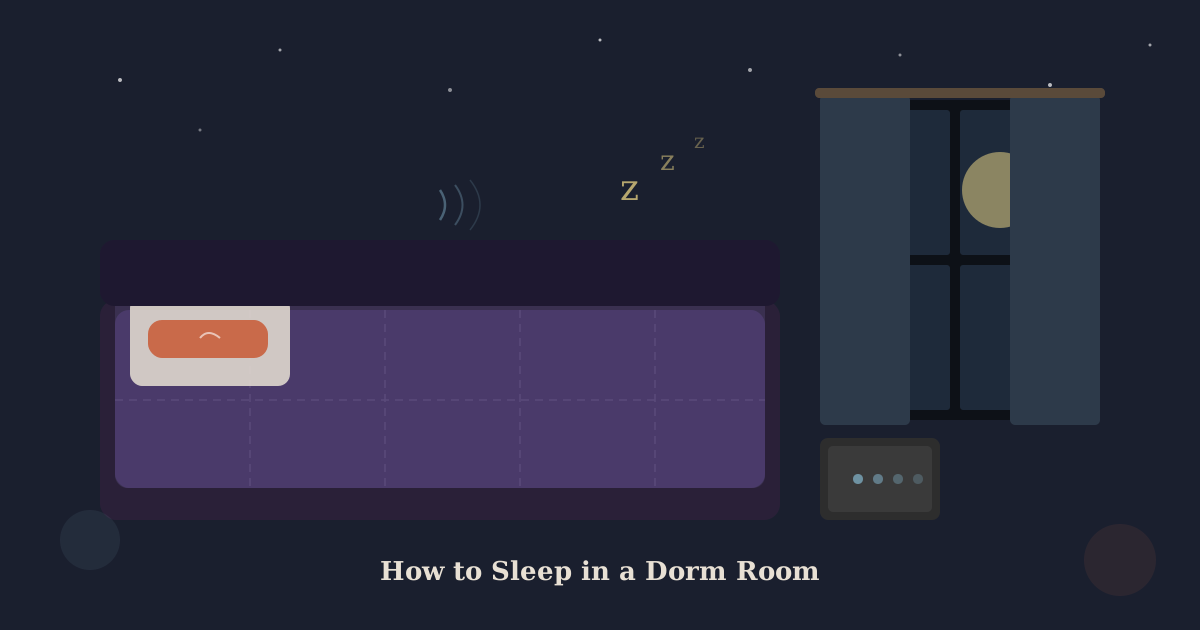
How to Sleep in a Dorm Room: Noise, Light, and Roommate Reality
Dorm rooms are loud, bright, and shared. Here's how to actually get enough sleep, white noise, blackout solutions, sleep schedules, and roommate ground rules.
In this article
Sleep is one of the first things that suffers in a dorm. You’re sharing a small room with someone whose schedule may not match yours, in a building where hallway noise doesn’t fully stop at midnight, and possibly with a window that lets in morning light at 6 a.m.
This is solvable. Here’s what actually works.
Quick answer: The most effective combination for sleeping in a dorm is earplugs or noise-canceling earbuds plus a white noise machine or fan running continuously. A blackout curtain or sleep mask handles the light problem. And a direct conversation with your roommate in the first week prevents most sleep conflicts before they become chronic. The gear helps, the conversation helps more.
📄 Free Printable
Download the First Night in Your Dorm Checklist (PDF) →
The handful of things to set up first — bed made, essentials unpacked, noise and light handled — so night one actually feels comfortable. No email required.
The Real Problems
Noise from your roommate. Typing, watching videos, getting up early, coming in late, all of it is audible in a shared 12×12 foot room.
Noise from the building. Hallway conversations, doors closing, someone’s music bleeding through a wall. Dorm construction tends to prioritize cost over soundproofing.
Light. A desk lamp, a monitor, streetlights or parking lot lights through the window, early sunrise if your window faces east.
Temperature. Dorm heating and cooling systems are often institutional, hot in early fall, unpredictably cold in winter, with limited individual control.
Different schedules. You might want to sleep at 11 p.m. Your roommate might start their best work at midnight. Neither of you is wrong, but it creates friction.
Noise Solutions
White Noise Machine
A white noise machine creates a consistent ambient sound that masks irregular noises, footsteps, doors, conversations, by filling in the acoustic gaps. It doesn’t eliminate noise; it makes your brain less reactive to it.
What to look for:
- Compact size (fits on a nightstand or shelf)
- Multiple sound options (white noise, pink noise, fan sounds)
- Volume control
- No auto-shutoff, or a long shutoff timer
A regular fan does the same thing and has the added benefit of airflow. Many students use a box or desk fan as their white noise source rather than buying a separate machine, one purchase solves two problems.
→ Shop white noise machines on Amazon
Earplugs
Foam earplugs are inexpensive, effective, and worth having even if you don’t use them every night. They’re most useful during finals week when building noise peaks, or on nights when the hallway situation is unpredictable.
Reusable silicone earplugs are more comfortable for all-night use than disposable foam. Sleep earbuds, soft, flat earbuds designed for side sleeping, are an option if you want to listen to audio while blocking external noise.
→ Shop reusable earplugs on Amazon
Noise-Canceling Earbuds or Headphones
If you like falling asleep to music, podcasts, or ambient sound, noise-canceling earbuds or over-ear headphones solve the noise problem and give you audio at the same time. Look for earbuds with a sleep-friendly design, flat profile, soft tips, if you sleep on your side.
Light Solutions
Blackout Curtains or Liner
Standard dorm curtains (if provided at all) are decorative, not functional. A blackout curtain or clip-on blackout liner blocks exterior light from parking lots, streetlights, and sunrise.
Installation note: Most dorms have a tension rod or curtain rod already in place. If not, a tension rod that fits your window width requires no hardware and leaves no damage. Check your window width before ordering curtains.
Common dorm window widths: 36”–48”. Measure yours before ordering. For a full breakdown of blackout curtain options sized for dorm windows, see the Dorm Room Curtain Guide.
→ Shop blackout curtains for dorm rooms on Amazon
Sleep Mask
The cheapest and most portable light-blocking solution. A well-fitted sleep mask blocks desk lamps, monitor glow, and window light completely. Useful if your roommate keeps a light on after you go to bed.
Contoured sleep masks, shaped to not press against your eyes, are more comfortable for extended wear than flat fabric masks.
→ Shop contoured sleep masks on Amazon
Temperature Solutions
Dorm temperature control is limited. Most rooms have a thermostat shared with neighboring rooms, or a system controlled centrally by housing. Your main tools:
A fan. Moves air and creates a cooling effect even without changing the actual temperature. Essential in early fall when dorms are warm and building heat hasn’t adjusted yet.
A window AC unit. Check your school’s policy, some dorms allow them, many don’t.
Lightweight blanket layers. Easier to adjust than a single heavy comforter. Add or remove layers as the room temperature fluctuates across the semester.
A mattress topper. Not a temperature fix per se, but a poor mattress contributes to restless sleep. If the mattress itself is uncomfortable, a 2-inch foam topper makes a real difference, see Best Mattress Toppers for Dorm Beds.
The Roommate Conversation
The most effective sleep solution is also the one students are most reluctant to have: a direct, early conversation about sleep habits.
Have it in the first week, before a pattern of conflict gets established. Keep it practical:
- “I usually try to sleep around 11 on weeknights, what’s your schedule like?”
- “Would you be okay using headphones after midnight?”
- “If I need to study late, I’ll use the study lounge instead of the desk lamp.”
Most conflicts aren’t about bad intentions. They’re about different schedules and no agreement in place. A five-minute conversation early in the semester prevents weeks of tension. Before you even move in, the Roommate Compatibility Quiz can help surface these questions in a low-stakes way.
Sleep Habits That Help in Any Environment
Beyond the gear, a few habits make dorm sleep more manageable:
Consistent sleep and wake times. Your body’s internal clock adjusts to regularity. Even on weekends, sleeping wildly late disrupts the rest of the week.
Keep your phone across the room. Phone scrolling in bed is the most common cause of delayed sleep. If it’s out of arm’s reach, you stop.
Use the study lounge for late-night work. If you have work to do past midnight, doing it in a common area instead of at your desk keeps your room associated with rest rather than stimulation.
Nap strategically. A 20-minute nap before 3 p.m. doesn’t disrupt nighttime sleep. Longer naps or later timing does.
Key Takeaways
- White noise + earplugs, the combination is more effective than either alone for blocking irregular dorm sounds.
- A fan doubles as a white noise machine and handles airflow, one purchase, two problems solved.
- A sleep mask is the cheapest and most portable light solution; a blackout curtain is more effective and permanent.
- Measure your window before ordering curtains, dorm window widths are typically 36”–48”.
- Have the roommate conversation in week one, before patterns form and resentment builds.
- Keep your phone across the room, the single highest-impact sleep habit change with zero cost.
For more on making your dorm room comfortable, see Cozy Dorm Room Ideas on a Budget and Best Dorm Room Fans.
Frequently Asked Questions
- The most effective combination is earplugs or noise-canceling earbuds plus a white noise machine or fan running in the background. White noise masks irregular sounds (typing, movement, talking) by creating a consistent ambient sound. Earplugs block more overall volume. Having a direct, early conversation with your roommate about sleep schedules prevents most conflicts before they become ongoing problems.
- Yes, if you're sensitive to light or your window faces east (sunrise), a parking lot with lights, or a lit common area. Dorm windows often let in significant light, and standard sheer curtains provided by housing do little to block it. Blackout curtains or a clip-on blackout liner solve this quickly. A sleep mask is a cheaper, space-saving alternative.
- A small, compact white noise machine with multiple sound options (white noise, pink noise, fan sounds) works well for most dorm situations. Some students use a fan instead. It provides both air circulation and consistent background noise. A free white noise app on your phone works but means your phone is on while you sleep. A dedicated machine is better if you're a light sleeper.
- Have this conversation in the first week, before resentment builds around conflicting schedules. Be direct but reasonable: share when you typically go to sleep and wake up, ask the same of them, and agree on a few simple rules (lights out by a certain time on weeknights, headphones after a certain hour). Most roommates are willing to compromise when asked early and respectfully.
How do college students sleep with noisy roommates?
Should I bring blackout curtains to a dorm room?
What is the best white noise machine for a dorm room?
How do I talk to my roommate about sleep schedules?