
6 Dorm Room Organization Hacks That Save Serious Space
Six dorm room organization hacks that free up real space in a tiny room — vertical storage, under-bed dead zones, and double-duty items. Low-cost and no damage.
In this article
A dorm room doesn’t actually lack storage, it lacks floor. There’s almost no open floor space, but there’s plenty of unused wall, unused air above the desk, dead space under the bed, an empty door back, and a half-used closet. Small-space organization is really just the skill of moving your stuff off the scarce floor and into all that wasted space.
The students whose rooms feel open and calm aren’t the ones with less stuff. They’re the ones using the room’s hidden zones. For the product side of this, see Dorm Room Storage Ideas and Best Under-Bed Storage for Dorm Rooms.
My biggest dorm problem was storage, or really, having no system for it. Within the first month my desk was buried under papers, chargers, and random things I couldn’t find a home for. A rolling cart and a few organizers changed everything, suddenly everything had a place and the room felt twice as big. The hack that mattered most wasn’t a product, it was giving every category a home.
📄 Free Printable
Download the Dorm Room Weekly Reset Checklist (PDF) →
A 15-minute weekly reset that puts everything back in its zone — it’s what keeps a clever small-room setup from quietly collapsing by midterms. No email required.
Quick answer: Use the room’s wasted space instead of its scarce floor. Go vertical (over-door organizers, stackable shelves, Command hooks), claim the dead space under the bed with flat bins and risers, favor double-duty items that store things inside, and contain small loose items in drawers and caddies so they stop spreading across surfaces. Then reset to baseline once a week, the systems only work if you put things back.
The Core Principle: Use Wasted Space, Not Floor Space
Most students instinctively fill the floor first, a bin here, a basket there, until the walkable space is gone and the room feels cramped. The fix is to flip the order: fill the wasted space first, and keep the floor as clear as possible.
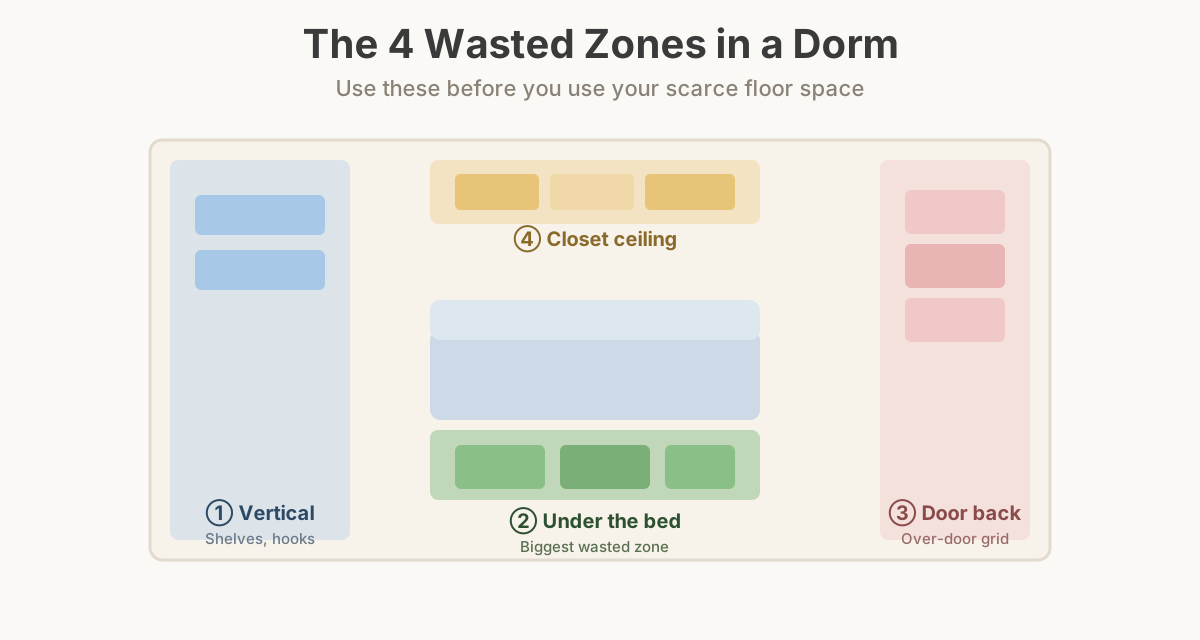
A dorm room’s wasted zones:
- Walls and the air above the desk (vertical)
- Under the bed (the biggest one)
- The back of the door
- The upper closet shelf and the space below hanging clothes
Move your stuff into those, and the floor, the thing that actually makes a room feel open, stays clear.
Hack 1: Go Vertical
The wall and the air above your furniture are free storage. Use them:
- Over-door and over-shelf organizers for shoes, toiletries, snacks, supplies.
- Stackable shelves or a small shelf riser on the desk to double your usable surface, store under and on top.
- Command hooks everywhere, bags, towels, keys, headphones, cables. Cheap, damage-free, endlessly useful. See How to Decorate Dorm Walls Without Damage for hanging without losing your deposit.
- A pegboard or wall grid (Command-mounted) for a customizable wall of small storage.
Going up is the single biggest small-space win, because it adds storage without touching your floor.
Hack 2: Conquer Under the Bed
Under the bed is the largest storage area in the room and the most wasted. To use it well:
- Measure your clearance first, floor to the bottom of the frame. “Under-bed” bins vary a lot in height and the wrong size wastes the purchase.
- Use flat rolling bins so things stay organized and slide out easily, rather than shoving items into a black hole you never see again.
- Raise the bed if allowed. Bed risers add several inches of clearance and dramatically increase what fits. Check your housing policy first, some schools prohibit them.
This one zone often holds more than the rest of the room’s storage combined. See Best Under-Bed Storage for Dorm Rooms.
Hack 3: Make Everything Earn Its Space
In a small room, single-purpose items are a luxury you can’t afford. Favor things that do two jobs:
- A storage ottoman or bench you sit on and store things inside.
- A desk organizer that also corrals your charging cables.
- A mirror with hooks on the back.
- Bedding with built-in storage or a headboard with shelves.
Every double-duty item is one fewer thing taking up space. Across a whole room, that adds up to a noticeably more open space.
Hack 4: Contain the Small Stuff
Here’s the thing that actually makes a small room feel messy: loose small items spreading across every flat surface. Chargers, pens, snacks, makeup, toiletries, receipts. Individually tiny, collectively chaos.
The fix is containment. Give every category a home:
- Drawer organizers so the desk drawer isn’t a junk pile.
- A small caddy for toiletries that travels to the bathroom.
- A cable pouch or clips for the charger tangle, see Dorm Room Tech Setup.
- A single bin for snacks, see Dorm Room Snack Station.
Contained clutter reads as tidy. Scattered clutter reads as a mess, even when it’s the exact same amount of stuff. The difference is entirely whether each thing has a home.
Hack 5: Use the Door and the Closet Ceiling
Two zones almost nobody uses well:
The back of the door. An over-door organizer adds a full grid of pockets, shoes, toiletries, supplies, hair tools, with zero floor cost. One of the highest-value square feet in the whole room.
The closet. Most dorm closets waste the space below hanging clothes and the shelf above. Add a hanging closet organizer, a second tension rod to double hanging space, or shelf dividers up top. See How to Organize a Dorm Closet for the full approach.
Hack 6: Reset Once a Week
None of this works as a one-time setup. A small room goes from tidy to chaotic in a matter of days when nothing gets returned to its place, because there’s no slack, every out-of-place item is immediately in the way.
Spend ten minutes once a week putting everything back where it lives. That’s it. The clever systems above only function if you reset to them. The reset is the difference between a setup that holds all semester and one that quietly collapses by midterms. For a fuller routine, see the Dorm Room Cleaning Checklist.
Key Takeaways
- Use wasted space, not floor space, walls, under-bed, the door, and the closet ceiling are the room’s hidden storage.
- Go vertical first with over-door organizers, shelf risers, and Command hooks.
- Under the bed is the biggest wasted zone, use flat bins and risers, and measure clearance first.
- Favor double-duty items that store things inside so each piece earns its footprint.
- Contain small loose items in drawers and caddies, scattered small stuff is what reads as mess.
- Reset to baseline once a week, the systems only hold if you put things back.
Related Dorm Guides
- Dorm Room Storage Ideas — the full storage toolkit for a dorm
- Best Under-Bed Storage for Dorm Rooms — using the biggest wasted zone
- How to Organize a Dorm Closet — doubling your closet capacity
- Small Dorm Room Ideas — making a tight room feel bigger
- Dorm Room Desk Organization — keeping the desk surface clear
- Dorm Room Cleaning Checklist — the weekly reset that keeps it all working
Frequently Asked Questions
- Use vertical space before floor space (over-door organizers, stackable shelves, hooks), claim the dead space under the bed with flat bins and risers, favor double-duty items that store things inside, and contain small loose items in drawers and caddies so they stop spreading across surfaces. Then reset to baseline once a week so the system holds. The core idea is using the room's wasted zones, walls, under-bed, door, closet ceiling, rather than its scarce floor.
- Under the bed, by far. It's the single largest storage area in most dorm rooms and the most ignored. Flat rolling bins make it organized and accessible, and bed risers (where allowed) add even more clearance. The back of the door and the upper closet shelf are the next most wasted zones, both add significant storage with no floor cost.
- Contain small loose items, chargers, pens, snacks, toiletries, in dedicated bins, drawers, and caddies, because scattered small things are what make a room read as messy. Use vertical and hidden storage so surfaces stay clear, favor double-duty furniture, and do a ten-minute weekly reset to return everything to its place. Clear surfaces are what make a small room feel calm.
- Yes, they're one of the most versatile dorm tools because they add storage to walls and doors without damage and remove cleanly at move-out. Use them for bags, towels, keys, cables, and lightweight organizers. Just check the weight rating on the package and let them cure for an hour before hanging anything. They turn unused vertical space into functional storage cheaply.
How do you organize a small dorm room?
What is the most wasted storage space in a dorm room?
How do I make a dorm room less cluttered?
Are Command hooks good for dorm organization?