What Size Are Dorm Beds? Twin XL Dimensions Explained
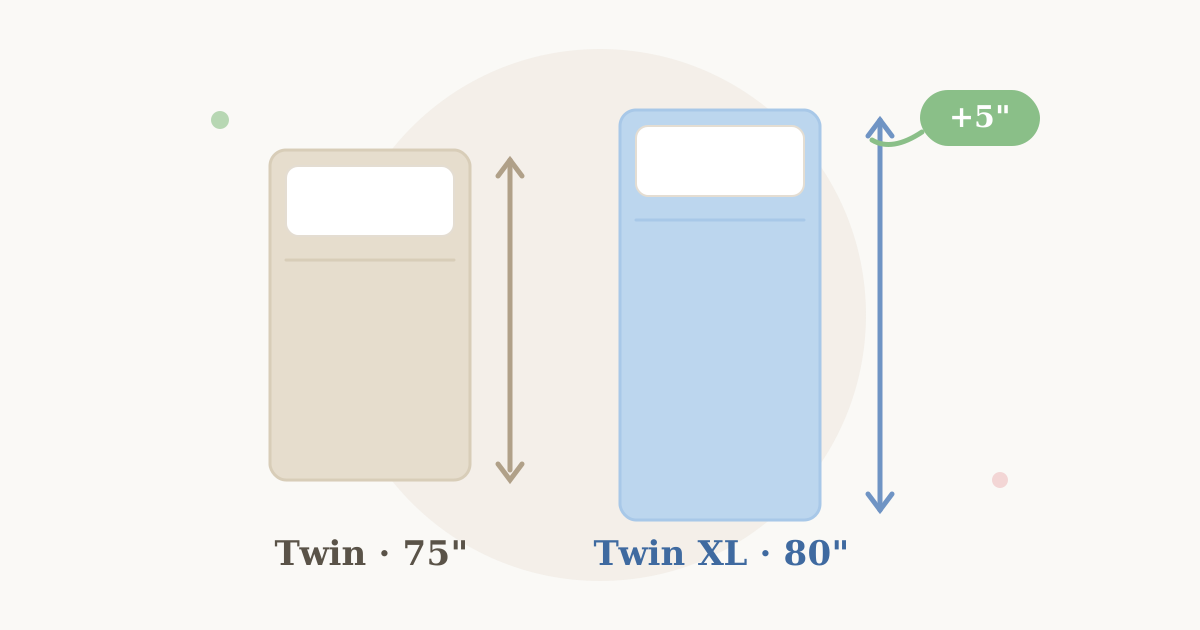
Almost all U.S. dorm beds are Twin XL: 38 inches wide by 80 inches long, 5 inches longer than a standard Twin. Here's what fits and how to confirm yours.
In this article
If you’re about to buy bedding for college, the only measurement that matters is this: dorm beds are Twin XL — 38 inches wide by 80 inches long. That’s the same width as the Twin bed you may have had at home, but 5 inches longer, and that 5 inches is exactly why regular Twin sheets won’t stay on a dorm mattress.
This page answers the size question completely — the exact dimensions, the exceptions, and what each measurement means for what you buy. For the full what-to-buy breakdown, see the Dorm Room Bedding Guide.
Quick answer: Nearly all U.S. college dorm beds are Twin XL: 38” wide × 80” long, with a mattress 6–8 inches thick. Standard Twin is 38” × 75”, so Twin sheets are 5 inches too short and will pop off the corners. Buy bedding labeled Twin XL. The exceptions are apartment-style and some upperclassman housing (often Full-size beds) — confirm your building’s bed size in your housing portal before ordering anything.
Dorm Bed Dimensions
| Bed size | Dimensions | Where you’ll find it |
|---|---|---|
| Twin XL (the dorm standard) | 38” × 80” | Nearly all traditional dorm rooms |
| Twin (regular) | 38” × 75” | Homes — not dorms |
| Full / Double | 54” × 75” | Some apartment-style campus housing |
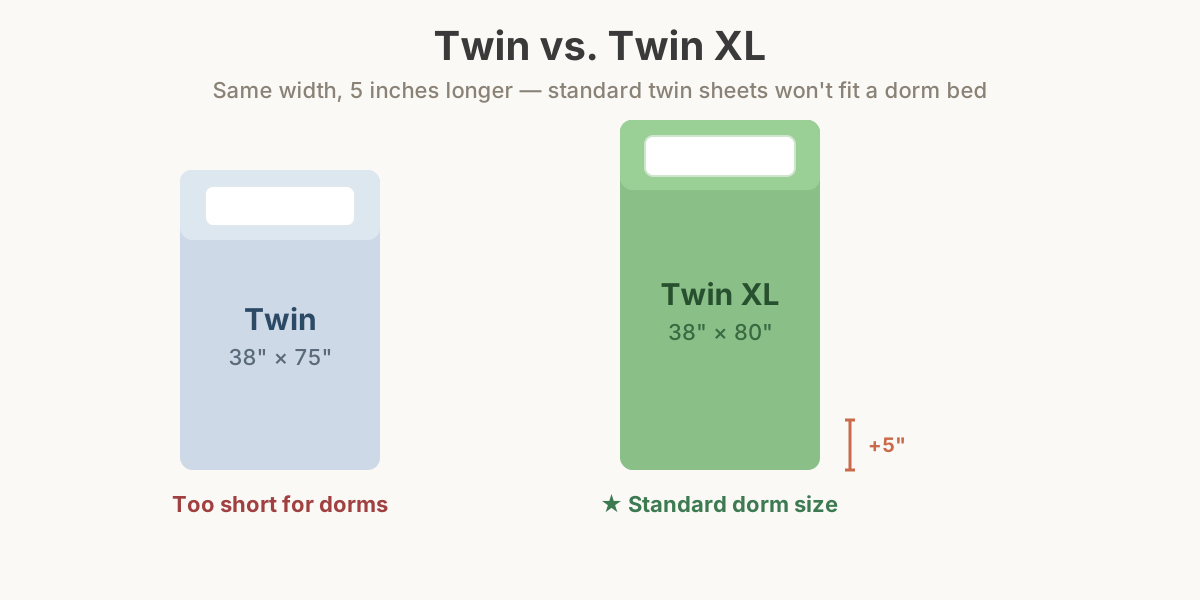
Colleges standardized on Twin XL for a simple reason: it fits the same floor footprint width-wise as a Twin but accommodates taller students. An 80-inch bed handles anyone up to about 6’4” comfortably.
The mattress itself is usually 6–8 inches thick — thinner and firmer than what most students sleep on at home. That thinness is actually good news for shopping: standard-pocket fitted sheets fit fine, and there’s spare depth to add a topper.
The Exceptions: When a Dorm Bed Isn’t Twin XL
Before you buy anything, know the three cases where the standard doesn’t hold:
- Apartment-style and suite housing — often Full-size beds, especially for upperclassmen. This is the most common exception.
- Older buildings — a small number of schools have legacy frames with non-standard mattresses.
- Lofted and bunked setups — still Twin XL, but the height changes what bedding makes sense (oversized comforters hang into the space below).
How to confirm yours in two minutes: check your housing portal’s room details page, or email the housing office / your RA and ask “what size is the mattress in [building name]?” It’s the same pre-purchase check as the appliance rules on the Complete Dorm Room Checklist — two minutes now versus a return shipment in August.
What Each Measurement Means for What You Buy
The dimensions only matter because they decide what goes in the cart:
| Item | Size to buy | Why |
|---|---|---|
| Fitted + flat sheets | Twin XL exactly | The one item where the label is non-negotiable — Twin sheets are 5” too short |
| Comforter or duvet | Twin/Twin XL (86”–90” long) | Needs drape, not an exact match |
| Mattress topper | Twin XL exactly | Sits on the mattress, must match its footprint |
| Mattress protector | Twin XL | Wraps the mattress like a fitted sheet |
Two of those rows have full guides: the Twin XL Sheets Guide covers materials and what to avoid, and the Best Twin XL Comforters guide covers the length math and fill types in detail.
One Upgrade the Dimensions Make Easy
Because dorm mattresses are thin (6–8 inches) and firm, the highest-impact purchase for the bed isn’t sheets or a comforter — it’s a 2–3 inch memory foam topper in Twin XL. The thin mattress leaves plenty of pocket depth for it, so your regular Twin XL fitted sheet still fits over both. See Best Mattress Toppers for Dorm Beds for thickness and material comparisons.
Bottom Line
Dorm beds are Twin XL — 38” × 80”, 5 inches longer than a regular Twin — with rare Full-size exceptions in apartment-style housing. Confirm your building’s size in the housing portal, then buy sheets and a topper labeled Twin XL exactly, and a comforter with at least 86 inches of length. Start with the Dorm Room Bedding Guide for the full shopping list.
Frequently Asked Questions
- The vast majority of U.S. college dorm beds are Twin XL, 38 inches wide by 80 inches long. The main exceptions are apartment-style and some upperclassman housing, where Full-size beds show up, and a small number of older buildings with non-standard frames. Confirm your specific building's bed size in your housing portal or by emailing the housing office before buying bedding.
- No. A dorm bed (Twin XL) is 38 by 80 inches, while a regular Twin is 38 by 75 inches. They're the same width, but the dorm bed is 5 inches longer. That's why standard Twin fitted sheets pop off the corners of a dorm mattress, they're too short to stay tucked.
- A comforter labeled Twin/Twin XL, typically 66 to 68 inches wide and 86 to 90 inches long, fits a dorm bed properly. Unlike fitted sheets, the comforter doesn't need to match the mattress exactly, it just needs at least 86 inches of length to cover the 80-inch mattress with normal drape.
- Most dorm mattresses are 6 to 8 inches thick, thinner than a typical home mattress. Standard-pocket Twin XL fitted sheets fit fine, and there's usually enough spare depth to add a 2 to 3 inch mattress topper without switching to deep-pocket sheets.
Are all dorm beds Twin XL?
Is a dorm bed the same size as a regular Twin?
What size comforter fits a dorm bed?
How thick are dorm mattresses?