The Best Backpacks for College in 2026 (What Actually Holds Up)
Most college backpacks fail within a year, wrong size, bad zippers, or straps that dig in. Here's what to actually look for and which styles are worth buying.
In this article
A backpack is the one piece of gear you use every single day of college. It holds your laptop, your notes, your charger, your lunch, and whatever else you grabbed on the way out the door, and it does this across a campus where you might walk two or three miles between classes.
Most students buy a bag based on how it looks and regret it six months later when the zipper sticks, the laptop bounces around, or the straps dig into their shoulders by 2pm.
Here’s what to actually look for. For what goes in the bag, see the Complete Dorm Room Checklist for Freshmen.
I packed my bag wrong on move-in day, tried to carry too much in one trip and ended up with a shoulder ache before I’d even unpacked. By second semester I’d settled into a medium-sized bag with a real laptop sleeve and nothing I didn’t need for that day. Bigger packs just meant I filled them with things that weren’t worth carrying.
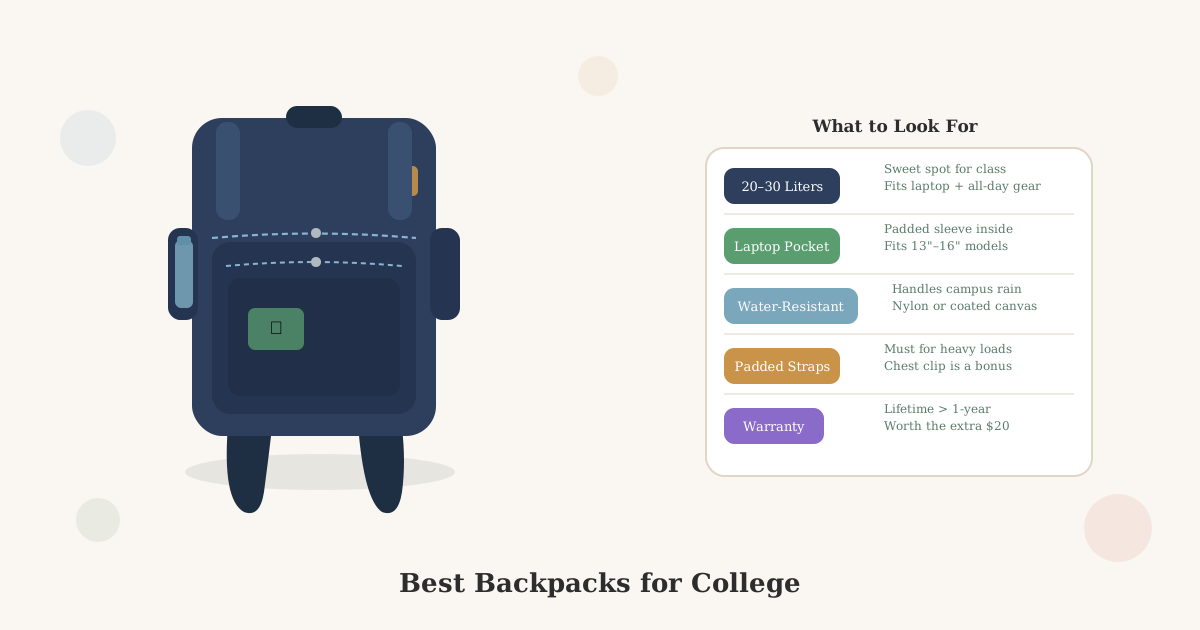
Quick answer: For most college students, a 25–30 liter bag in the $60–$100 range with a padded laptop sleeve, two compartments, and a water bottle pocket covers everything. JanSport SuperBreak Plus, Herschel Little America, and Osprey Daylite Plus are consistently reliable at different price points. Spend more if you’re carrying heavy loads long distances; spend less if you’re mostly moving between campus buildings.
What Actually Matters in a College Backpack
Capacity (Liters)
Most students don’t think in liters, but it’s the clearest way to compare bags.
- Under 20L: Too small for a full class day. Fine for a gym bag or a quick carry.
- 20–25L: Works well for one or two classes, a laptop, and light extras.
- 25–30L: The sweet spot for most students. Holds a laptop, two notebooks, chargers, a water bottle, snacks, and a small personal kit without being oversized.
- 30–40L: Good for commuters or students carrying bulky gear (art supplies, lab equipment, gym clothes). Can feel like a lot if you’re not using the space.
- Over 40L: Hiking territory. Not practical as a daily campus bag.
Laptop Compartment
This is the most important feature on the list. A good laptop sleeve:
- Has its own separate zipper (so you can access the laptop without unpacking everything)
- Is padded on all sides, not just the back panel
- Actually fits your laptop. Measure yours before you buy, and check the bag’s listed laptop dimensions
A sleeve listed as “fits up to 15 inches” doesn’t always mean it fits a 15-inch laptop with a case on it. When in doubt, size up.
Shoulder Straps
Padded, contoured straps matter more than most buyers realize. A heavy bag on thin, flat straps causes real shoulder and neck discomfort after a long day. If you’re regularly carrying 15+ pounds (laptop, textbooks, a water bottle, a jacket), prioritize bags with thick padding and an S-curve shape.
A sternum strap, the horizontal strap across the chest, transfers load from the shoulders to the chest and stabilizes the bag when you’re moving quickly. It’s optional for light loads; useful for heavy ones.
Organization
At minimum: two main compartments and a water bottle pocket.
One compartment for the laptop and notebooks. One for everything else. A front pocket for small items. Your phone, keys, AirPods, pens. A side water bottle pocket so you’re not unzipping anything to access it.
More pockets than that often means more places to lose small items without adding real functionality.
Durability Signals
Look for:
- YKK zippers. They’re the industry standard for reliability; the brand name is usually printed on the pull
- Reinforced bottom corners, where most bags first show wear
- Stitching at strap attachment points, the most common failure point on budget bags
- Ripstop nylon or ballistic nylon fabric, more durable than standard polyester
Budget Picks ($30–$55)
These work. They don’t last four years under daily heavy use, but they’re honest about what they are.
JanSport SuperBreak (~$35)
The most reliable bag at this price. One main compartment, one front pocket, and a 26L capacity that fits a laptop and a day’s worth of gear. No laptop sleeve, the main compartment works, but nothing stops the laptop from sliding around. The brand has a lifetime warranty, which is unusual at this price. Works well for light daily carry.
→ Browse JanSport SuperBreak on Amazon
Mygreen Laptop Backpack (~$35–$45)
A generic but well-reviewed option that includes a padded laptop sleeve, USB charging port, and multiple compartments for under $40. Quality control varies by unit, but for the price it covers the basics. Good for students who want the organizational features of a more expensive bag without the cost.
→ Browse budget laptop backpacks on Amazon
Mid-Range Picks ($55–$100)
This is where build quality improves noticeably. Better zippers, thicker padding, more consistent stitching.
JanSport SuperBreak Plus (~$55)
An upgraded version of the SuperBreak with a 34L capacity and a padded 15-inch laptop sleeve. Keeps the same clean, simple look. The extra $20 over the base SuperBreak gets you the laptop compartment, which matters. Recommended for students who want reliability without overthinking it.
→ Browse JanSport SuperBreak Plus on Amazon
Herschel Little America (~$90)
A step up in aesthetics without sacrificing function. 25L capacity, fleece-lined laptop sleeve (fits up to 15 inches), magnetic buckle closure on the main compartment, and a distinctive look that’s held up well on campuses for years. The strap padding is average, fine for light-to-medium loads, less ideal if you’re carrying a lot. The brand offers a limited lifetime warranty.
→ Browse Herschel Little America on Amazon
Kaukko 35L Canvas Backpack (~$60–$75)
A canvas option for students who prefer a more classic or vintage look. Heavier than nylon bags but holds up well. Good for students who want something that doesn’t look like a hiking or tech bag. Not the best choice if you’re commuting in rain regularly, canvas absorbs water without treatment.
→ Browse canvas college backpacks on Amazon
Worth Spending More ($100–$150)
Not for everyone, but worth it for students who commute long distances, carry heavy gear, or want a bag that genuinely lasts four years.
Osprey Daylite Plus (~$110–$130)
Osprey makes outdoor gear and it shows. The Daylite Plus is 20L, smaller than some competitors, but the fit, padding, and construction are noticeably better. The shoulder harness is designed for full-day comfort. If you’ve ever had a cheap bag leave your shoulders sore by early afternoon, this is the corrective. Osprey’s “All Mighty Guarantee” covers repairs and replacements for life.
→ Browse Osprey Daylite Plus on Amazon
Timbuk2 Authority (~$120–$150)
A 30L bag with a clamshell opening (it opens flat like a suitcase, which makes packing and finding items easy), a padded laptop sleeve, and better-than-average strap padding. Heavier than most competitors at this price but extremely organized. Good for commuters who move between school, work, and gym in the same bag.
→ Browse Timbuk2 laptop backpacks on Amazon
What to Skip
Drawstring bags as a primary bag. Fine for the gym or a quick carry, not for a full day of classes with a laptop. No structure, no padding, straps that cut into shoulders under any real weight.
Bags with no dedicated laptop sleeve. The laptop slides around, picks up debris at the bottom of the bag, and has no padding against impact. Even if you put it in a sleeve separately, a bag without a dedicated compartment is less functional.
Oversized hiking bags (40L+) for daily campus use. They’re bulky, overkill for textbooks and a laptop, and often lack the organizational pockets that make a campus day functional.
Bags from fast-fashion brands with no warranty. The zipper pulls, stitching, and fabric on low-margin fashion backpacks degrade faster. You’ll replace them inside a year.
Commuter vs. On-Campus Student
If you commute by train or bus: Go bigger (28–35L) to fit a change of clothes or gym gear. Prioritize a laptop compartment with good padding since the bag gets jostled on transit. Anti-theft features, hidden pockets, slash-resistant fabric, are worth considering if you’re regularly in crowded transit.
If you walk between buildings on campus: A 22–27L bag is plenty. Prioritize strap comfort and weight distribution over raw capacity.
If you bike to class: Look for a bag with a sternum strap and hip belt to keep the bag from shifting. Osprey and Deuter make campus-friendly bags designed for cycling.
→ Browse commuter backpacks on Amazon
Key Takeaways
- 25–30L fits most college students, laptop, two notebooks, chargers, water bottle, and small personal items without bulk.
- The laptop sleeve matters most, padded on all sides, sized for your actual laptop, with its own zipper.
- Shoulder strap quality determines comfort, thin, flat straps cause real pain on long days; padded and contoured straps don’t.
- Budget bags work for light use, if you’re walking short distances with a modest load, a $35 JanSport is honest about what it is.
- For heavy loads or long commutes, spend $80–$120, the difference in strap padding and construction is noticeable.
- JanSport and Osprey have the best warranties, lifetime and all-items coverage, respectively, at very different price points.
Looking for more college gear to go with it? See the Dorm Room Tech Setup Guide and the Complete Freshman Dorm Room Checklist.
Related Dorm Guides
- Best Laptops for College, the most important item going inside the bag
- Best Headphones for Studying, another essential for the daily campus commute
- Dorm Room Tech Setup, what to set up on your desk when the bag comes off
- Complete Dorm Room Checklist for Freshmen, full move-in list including campus carry gear
- How to Set Up a Dorm Room for Under $200, where a backpack fits in a tight dorm budget
- Dorm Move-In Checklist, packing and organizing what you’ll carry to class on day one
Frequently Asked Questions
- 20–30 liters is the sweet spot for most college students. That fits a 15-inch laptop, a notebook or two, chargers, a water bottle, and a small pouch for your phone and keys, without the bag becoming too bulky to carry all day. Anything under 20L tends to feel cramped for a full class day; anything over 35L starts to feel like a hiking pack unless you're commuting with gear.
- You don't need a fully waterproof bag, but weather resistance matters. Look for bags described as 'water-resistant'. They handle rain well enough for a walk across campus. If you're in a rainy climate or need to protect an expensive laptop, a dedicated rain cover (sold separately for $10–$15) on a water-resistant bag is a practical upgrade.
- Sometimes. Budget bags in the $30–$50 range can last a full year or two if you're not overloading them and you're not walking miles a day. The main failure points at this price are zipper pulls, laptop padding, and shoulder strap stitching. If your commute is short and the bag is mostly used for carrying a laptop and a notebook, a budget bag is fine. If you're walking 30+ minutes a day with a heavy load, spend $70–$100 for padded straps and better construction.
- A dedicated padded laptop sleeve (fits your actual laptop size, 13 inch or 15 inch), at least two main compartments so you're not digging through everything to find one item, a water bottle pocket on the outside, padded shoulder straps, and a sternum strap if you carry heavy loads regularly. Luggage pass-through, USB charging port, and anti-theft design are nice extras, not essentials.
- A well-made bag in the $70–$120 range should last all four years of college with normal use. Budget bags ($30–$50) often need replacing after one to two years. The brands known for longevity at fair prices: JanSport (lifetime warranty), Herschel (limited lifetime warranty), Osprey (all-items warranty), and North Face.
What size backpack do I need for college?
Do I need a waterproof backpack for college?
Is a $30 backpack good enough for college?
What features should a college backpack have?
How long should a college backpack last?
%20%E2%80%94%20Most%20college%20backpacks%20fail%20within%20a%20year%2C%20wrong%20size%2C%20bad%20zippers%2C%20or%20straps%20that%20dig%20in.%20Here's%20what%20to%20actually%20look%20for%20and%20which%20styles%20are%20worth%20buying.)