First Apartment Kitchen Essentials: What to Buy First
Setting up a kitchen for the first time feels overwhelming. Here's what most people actually use in year one and what sounds useful but ends up gathering dust.
In this article
A full kitchen in your own apartment is exciting right up until you’re standing in the kitchenware aisle trying to figure out whether you need a Dutch oven. You probably don’t. Not yet, anyway.
The goal for a first apartment kitchen is to have what you need to cook basic meals without overspending on equipment you won’t use. Everything else can be added later, once you know how you actually cook. For a full picture of what you’ll need beyond the kitchen, see the First Apartment Checklist.
Going from a dining hall to cooking for myself was the biggest practical adjustment of moving into an apartment. In the dorm I kept snacks in the room and used the dining hall for everything else. In the apartment I needed actual cooking equipment, and the first few weeks showed me quickly which items I used daily and which would sit in the cabinet.
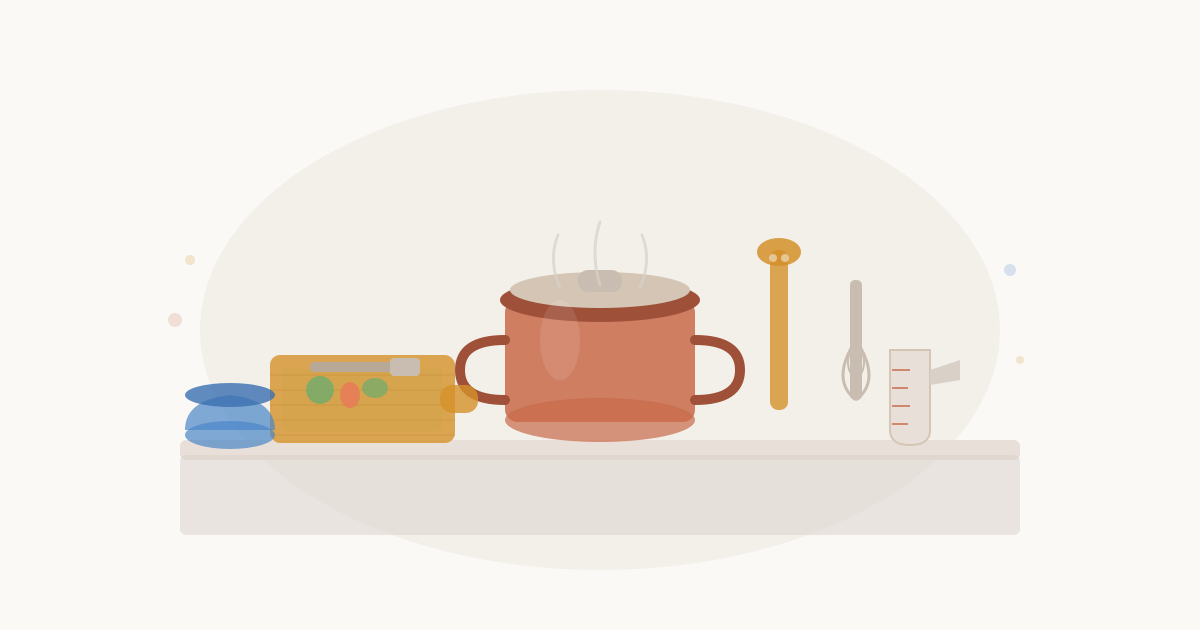
Quick answer: Start with four things: a 10–12 inch frying pan ($25–$45), a 2–3 quart saucepan, an 8-inch chef’s knife, and a cutting board. Add 4 each of plates, bowls, mugs, glasses, and flatware, plus three utensils (spatula, wooden spoon, tongs) and a can opener. That’s a functional kitchen for under $150. Cook for two weeks, then buy only what’s actually missing. Skip the full pot-and-pan set, stand mixer, and specialty gadgets. They gather dust.
The Actual Essentials
These are the items you’ll use almost every day. They’re worth buying.
One Good Frying Pan
A 10- or 12-inch frying pan handles more than any other pan you’ll own: eggs, sautéed vegetables, chicken, pasta sauce, quesadillas. If you only buy one pan, this is the one.
Don’t buy a non-stick pan for under $15, the coating degrades quickly and needs to be replaced. Look for something in the $25–$45 range from a brand like OXO, T-fal, or a basic stainless option.
One Medium Saucepan
A 2- to 3-quart saucepan handles boiling pasta, making soups, heating canned goods, and cooking rice. You’ll use it several times a week.
A Chef’s Knife
One good, sharp 8-inch chef’s knife handles nearly all the cutting you’ll do. A good knife makes cooking noticeably faster and easier, and a dull knife is actually more dangerous than a sharp one because it requires more force.
You don’t need a knife block or a full set. One good knife, a small paring knife for detail work, and a serrated bread knife if you eat a lot of bread covers 95% of kitchen needs.
Keep a sharpener around. Even a basic pull-through sharpener extends the life of your knife significantly.
A Cutting Board
Get at least one large enough to actually work on, roughly 12x18 inches. A second smaller one for quick tasks is helpful but not required at first.
Dishes and Flatware
Start with 4 of each: plates, bowls, mugs, glasses, forks, knives, spoons. More than 4 leads to the same dirty dishes sitting in the sink until you run out of clean ones. Four forces the habit of washing as you go.
Cooking Utensils
At minimum: a spatula, a wooden spoon or silicone spoon, and tongs. These three handle the vast majority of what you’ll actually cook.
A Can Opener
Manual can openers are cheap, don’t break, and take up almost no drawer space. Buy one before you move in, not after you discover you need it.
Dish Soap, a Sponge, and a Drying Rack
The unsexy necessities. Buy the drying rack that fits your counter. Measure first, because kitchen counter space in apartments is often limited.
Appliances Worth Having
A Microwave
If your apartment doesn’t come with one, this is one of the first things to add. Reheating leftovers, steaming vegetables, defrosting. You’ll use it daily.
An Electric Kettle
Faster than the stovetop for boiling water, useful for tea, instant oatmeal, pour-over coffee, ramen, and anything else that needs hot water. One of the most-used small appliances in most apartment kitchens.
A Coffee Maker (If You Drink Coffee)
If you drink coffee every day, a coffee maker pays for itself quickly. A simple drip machine works. A French press is even simpler and cheaper. Avoid the expensive single-serve pod machines unless you’re committed to the ongoing cost of pods.
A Toaster or Toaster Oven
A toaster is inexpensive and takes up little space. A toaster oven does more (it can reheat food without making it soggy the way a microwave does) but costs more and takes up more counter space. Pick based on how much counter you have.
What to Skip (At Least for Now)
A Full Pot and Pan Set
Boxed sets come with 10 or 12 pieces, most of which you’ll rarely use. A large stockpot, a griddle pan, and multiple sizes of saucepan sound useful but for most first-year cooks, two pans cover almost everything. Buy additional pieces as you realize you actually need them.
A Stand Mixer
Unless you bake regularly, a stand mixer is expensive, heavy, and will sit in your cabinet for months between uses. Buy one when you know you’ll use it.
A Blender
Unless you make smoothies daily or blend soups, a blender is a lower priority than it seems. An immersion blender (handheld) is more versatile and easier to store. Consider that instead.
A Rice Cooker
A rice cooker produces great rice with no effort, but a saucepan with a lid also produces great rice with a little attention. Not a first purchase.
Specialty Gadgets
Garlic presses, egg separators, avocado slicers, quesadilla makers, waffle irons, all of these do one thing and take up drawer and cabinet space. Skip them at first.
Coordinating with Roommates
Before buying any shared kitchen items, talk to your roommates. Nothing wastes money faster than three people each buying a full set of dishes or three separate sets of pots and pans.
Agree in advance:
- Who’s bringing the basic pots and pans
- Who’s buying the dish soap, sponges, and trash bags for the kitchen
- What to do when someone moves out, does the stuff stay or go?
Where to Buy for Less
- Facebook Marketplace and thrift stores: dish sets, pots and pans, and small appliances are commonly donated in excellent condition
- Dollar stores: cleaning supplies, can openers, measuring cups, and basic utensils are often perfectly serviceable from a dollar store
- IKEA: inexpensive dishes, glasses, and flatware that work fine and look decent
- Grocery stores: basic dish soap, sponges, and trash bags, no need to go to a specialty store
The Approach That Works
Buy what you need now. Cook for two weeks. Notice what’s missing. Buy that.
The list of things you actually need in a kitchen becomes very clear once you’re cooking regularly in a space. The list you make while standing in a store aisle, or reading this guide, is always longer than what you’ll actually use.
Key Takeaways
- Start with four core items: a 10–12 inch frying pan, a 2–3 quart saucepan, an 8-inch chef’s knife, and a cutting board. These handle the vast majority of everyday meals.
- One good knife beats a full knife block: a sharp 8-inch chef’s knife, a small paring knife, and a serrated bread knife cover 95% of cutting tasks; keep a basic pull-through sharpener alongside it.
- Buy 4 of each dish type, not more: plates, bowls, mugs, glasses, flatware, four forces the habit of washing as you go instead of letting dishes pile up.
- An electric kettle is one of the most-used small appliances: hot water for tea, instant oatmeal, ramen, and pour-over coffee; boils faster than the stovetop.
- Skip the full cookware set: boxed sets come with 10–12 pieces, most of which you’ll rarely use. Add individual pans as you discover you actually need them.
- Facebook Marketplace and thrift stores are the best first stops: dish sets, pots and pans, and small appliances are commonly donated in excellent condition at a fraction of retail price.
- The real method: buy the basics, cook for two weeks, notice what’s missing, then buy that, the list becomes very clear once you’re actually cooking in the space.
For more on what changes when you move off campus, see the First Apartment Checklist and How to Furnish a First Apartment on a Budget.
Related Dorm Guides
- First Apartment Checklist, full list of what to buy, borrow, and set up when moving off campus
- How to Furnish a First Apartment on a Budget, buying furniture in the right order without overspending
- First Apartment Cleaning Checklist, cleaning supplies and schedule for your first place
- Moving from a Dorm to Your First Apartment, what changes and what carries over from dorm life
- First Apartment Grocery List, stocking your kitchen for the first time on a student budget
- Dorm Room Coffee Setup, coffee maker options that carry from the dorm into an apartment
Frequently Asked Questions
- A medium pot, a skillet, a cutting board, a sharp knife, a spatula, and a can opener cover most meals. Add a sheet pan, a colander, and measuring cups once you're cooking regularly. Everything else can wait until you know your actual cooking habits.
- Specialty appliances like bread makers, waffle irons, and pasta machines go largely unused. A full knife block, matched cookware sets, and a Dutch oven are better as later purchases once you know how much and what you actually cook.
- A functional first kitchen can be equipped for $75–$150 if you focus on a few quality pans and one good knife rather than a full matched set. Thrift stores and discount stores often have excellent kitchen items at a fraction of retail price.
- Yes, small appliances that were banned or too bulky for a dorm (a toaster, a kettle, a rice cooker) transfer directly to an apartment. The main additions you'll need are full-size pots, pans, and a baking sheet for oven cooking.
What are the essential items for a first apartment kitchen?
What kitchen items are not worth buying for a first apartment?
How much should I spend setting up a first apartment kitchen?
Can I bring dorm room appliances to my first apartment?